Jewelry & Accessories
The world of jewellery and accessories represents far more than mere adornment. Whether you’re drawn to the quiet elegance of a vintage brooch, the tactile pleasure of fine leather, or the transformative power of a well-chosen scarf, these pieces become part of your daily narrative. Yet navigating this landscape—from understanding what makes a piece truly valuable to knowing how to care for it properly—can feel daunting without a solid foundation of knowledge.
This resource brings together the essential elements you need to make informed decisions about jewellery and accessories. From recognising superior craftsmanship and understanding British hallmarking standards to protecting your collection and making ethical purchasing choices, we’ll explore the practical knowledge that transforms casual interest into confident connoisseurship. Whether you’re acquiring your first quality piece or managing a cherished collection, understanding these fundamentals will serve you throughout your journey.
What Defines Quality in Jewellery and Accessories?
Quality reveals itself not in price tags but in the details that endure. Learning to recognise the markers of superior work—whether in jewellery or leather goods—empowers you to make choices that deliver lasting satisfaction rather than fleeting gratification.
Recognising Superior Craftsmanship
Exceptional jewellery craftsmanship manifests in techniques that machines cannot replicate. Guillochage, for instance, creates intricate geometric patterns engine-turned into metal with mathematical precision—a decorative technique prized since the Georgian era. Similarly, Zaratsu polishing produces mirror-like surfaces with distortion-free reflections, achieved through flat-plane polishing rather than standard rotary methods. These finishes aren’t merely aesthetic; they represent hours of skilled manual labour that distinguishes fine pieces from mass production.
Enamelling techniques offer another window into quality. Traditional methods include champlevé (enamel in engraved recesses), cloisonné (enamel between wire partitions), and plique-à-jour (translucent enamel without backing, creating a stained-glass effect). Each requires precise temperature control and multiple firings—skills developed over years of apprenticeship. Even hidden finishes matter: examine the reverse of a brooch or the interior of a ring. Quality makers finish surfaces you’ll never see because craftsmanship is a matter of principle, not convenience.
Understanding Leather Quality
With leather goods, quality begins with the hide itself and the tanning method employed. Vegetable tanning uses natural tannins from tree bark, producing leather that develops a rich patina over decades. Chrome tanning, whilst faster and more water-resistant, yields leather with less character development. Full-grain leather—the top layer of the hide with natural grain intact—represents the highest quality, whilst “genuine leather” often signifies lower-grade splits or corrected surfaces.
Consider these quality indicators when evaluating leather pieces:
- Edge finishing: hand-burnished edges versus painted edges that eventually chip
- Stitching: saddle-stitched by hand (two needles, incredibly durable) versus machine lockstitch
- Hardware: solid brass or steel versus plated alloy that wears through
- Construction: single-piece patterns minimising seams where stress causes failure
Building a Meaningful Collection
Collecting jewellery and accessories becomes more rewarding when you approach it with strategy rather than impulse. Understanding the secondary market and developing a curatorial eye transforms acquisition into investment—both financial and personal.
The Secondary Market Opportunity
The pre-owned market for luxury accessories offers exceptional value for informed buyers. Iconic leather goods from established houses often appreciate rather than depreciate, particularly limited editions or discontinued styles. A classic handbag from a prestigious British or Continental maker might cost 40-60% less on the secondary market than retail, yet retain—or increase—its value if properly maintained.
However, this market demands vigilance. Counterfeit detection requires examining stitching consistency, hardware engravings, date codes, and material quality. Authentic pieces exhibit meticulous construction throughout—no glue residue, perfectly aligned patterns at seams, and hardware with substantial weight. Reputable dealers provide authentication guarantees, but developing your own eye remains invaluable. Compare suspect pieces directly against authenticated examples, focusing on areas counterfeiters typically neglect: zipper pulls, interior stamps, and edge finishing.
Curating Wisely
The concept of a capsule collection applies beautifully to accessories. Rather than accumulating dozens of mediocre pieces, invest in fewer items of superior quality that complement your lifestyle. A well-planned capsule might include versatile neutrals (black, navy, tan) in timeless styles, accented by one or two statement pieces expressing personality. This approach proves both economical and sustainable—quality pieces worn regularly for decades cost less per wearing than fast fashion replaced seasonally.
When selecting pieces, consider their versatility across contexts. A fine cashmere scarf serves formal occasions yet elevates casual wear. Classic leather belts transition seamlessly from business to weekend. Jewellery in precious metals can be worn daily or reserved for special moments. This flexibility maximises utility whilst minimising wardrobe clutter.
The British Context: Standards, Artisans and Climate
Britain’s unique position in the world of jewellery and accessories—shaped by centuries of hallmarking tradition, London’s thriving bespoke scene, and the demands of an unpredictable maritime climate—offers both opportunities and considerations for collectors based here.
Hallmarks and Authentication
British hallmarking represents one of the world’s oldest consumer protection systems, dating back over seven centuries. Understanding these marks transforms how you evaluate precious metal items. Each complete hallmark includes several elements: the sponsor’s mark (maker’s initials), the standard mark (purity—lion passant for sterling silver, crown for gold), the assay office mark (leopard’s head for London, anchor for Birmingham, rose for Sheffield, castle for Edinburgh), and historically, a date letter indicating the year of assay.
These marks aren’t decorative—they’re legal guarantees of metal purity, enforced by independent assay offices. Items weighing above certain thresholds must be hallmarked to be sold as precious metal in the UK. Learning to identify and decode these symbols allows you to authenticate pieces, determine their age, and trace their origin. Be aware that certain items (very small pieces, some antiques) qualify for exemptions, and international standards differ—American sterling uses “925” whilst British uses the lion passant, despite identical purity.
Bespoke Creation in London
London’s concentration of skilled artisan jewellers offers exceptional opportunities for bespoke creation. The process typically unfolds in several stages:
- Initial consultation where you articulate your vision and budget
- Design development through sketches and technical drawings
- Material selection, particularly gemstones where quality dramatically impacts final cost
- Manufacturing, whether through traditional hand-fabrication, casting, or CAD/CAM techniques
- Finishing and stone-setting, often the most time-intensive phase
Transparency about costs prevents unpleasant surprises. Reputable workshops provide detailed quotations separating materials, labour, and stone-setting. Hidden costs often emerge in modifications during creation or upgrades to gem quality. Establishing clear communication and receiving itemised estimates protects both parties. The result—a piece crafted specifically for you—carries emotional value no mass-produced item can match.
Dressing for the Weather
British weather’s notorious unpredictability makes accessory choices particularly important. Understanding fibre properties helps you select pieces that perform whilst looking elegant. Wool offers exceptional warmth-to-weight ratio and remains insulating even when damp—crucial for our climate. Cashmere provides luxury softness but pills more readily than hardier wools. Silk, whilst elegant, offers little insulation. Synthetic fibres dry quickly but often lack breathability.
Weave structure matters equally. Tightly woven scarves block wind effectively, whilst looser weaves provide breathable warmth. To avoid felting during washing—a common disaster with wool accessories—use cool water, gentle agitation, and never subject them to temperature shocks. A quality wool scarf, properly cared for, serves you for decades through countless damp British winters.
Protecting Your Collection
As your collection grows in both monetary and sentimental value, proper protection becomes essential. Standard home contents insurance often proves inadequate for valuable jewellery and accessories, with low single-item limits and exclusions for mysterious disappearance.
Specialist jewellery insurance offers several advantages over simply extending your home policy. These policies typically cover worldwide travel, accidental damage, and loss without requiring proof of forced entry—scenarios where standard policies deny claims. They also avoid the excess payments and no-claims bonus impacts of home insurance claims. However, they require professional valuations, usually updated every three to five years to reflect current replacement costs.
Storage security deserves equal attention. Home safes should be both fireproof and securely anchored—a portable safe simply becomes portable for thieves. For substantial collections, consider:
- Bank vault storage for pieces worn infrequently
- Photographic documentation of each item, including hallmarks and distinguishing features
- Discreet storage locations rather than obvious bedroom drawers
- Separation of valuable pieces across multiple locations to minimise loss from single events
When travelling, never pack valuable jewellery in checked luggage. Wear your most valuable pieces or carry them in hand luggage. Hotel safes offer minimal security—determined thieves bypass them easily. For extended travel, consider temporary insurance riders specifically covering your itinerary.
Maintenance and Restoration
Proper care extends the life of quality pieces indefinitely, whilst neglect can cause irreversible damage even to robust materials. Understanding the fundamentals of maintenance—and knowing when to seek professional help—protects your investment.
For daily jewellery care, sequence matters. Remove jewellery last when dressing and remove it first when undressing. This simple habit prevents exposure to cosmetics, perfumes, and hair products that corrode metals and cloud gemstones. Many people do the reverse, applying makeup and fragrance whilst wearing jewellery, then wondering why their pieces tarnish prematurely.
Home cleaning can be safe if approached carefully. Warm water with a drop of washing-up liquid and a soft brush suffices for most metal jewellery without delicate gemstones. Ultrasonic cleaners, whilst effective, can damage pieces with fragile settings, emeralds (often oil-treated), pearls, or antique items with hidden weaknesses. Never subject jewellery to thermal shock—moving from hot to cold water can crack gemstones, particularly those with inclusions.
Professional restoration of antique jewellery requires specialists who understand period techniques. Victorian and Georgian pieces often use lower-karat gold alloys more prone to stress and wear than modern standards. Replacing missing components demands matching not just appearance but historical accuracy—modern findings on period pieces destroy authenticity and value. Always obtain multiple detailed quotations for restoration work, specifying which elements will be preserved versus replaced. Over-restoration that removes patina can diminish both aesthetic appeal and market value.
Ethical Choices and Legacy
Increasingly, collectors seek not just beauty but alignment between their values and their acquisitions. Ethical sourcing and thoughtful legacy planning allow your collection to reflect both personal taste and principled action.
The gemstone trade has historically involved troubling labour practices and environmental damage. Ethical gemstone sourcing requires verifying origin through documentation—certificates from recognised laboratories, invoices showing supply chain, and where possible, direct relationships with ethical miners or dealers. Recycled gemstones from estate pieces offer another sustainable option, providing beauty without new extraction. Be wary of treatments: heat treatment generally enjoys acceptance, but undisclosed irradiation, fracture-filling, or diffusion treatment constitutes fraud.
The financial aspect of gemstone investment involves understanding depreciation curves. Unlike popular belief, most gemstones depreciate from retail purchase price—dealers need margins to operate. However, exceptional stones (large, unheated, high-clarity natural rubies, sapphires, or emeralds) can appreciate significantly. For investment purposes, prioritise quality over size and natural over treated, whilst maintaining realistic expectations about liquidity.
Planning the transfer of jewellery and accessories to the next generation requires both legal and practical consideration. In the UK, the seven-year rule for inheritance tax means gifts made more than seven years before death escape taxation—though this applies to values exceeding the nil-rate band. Documentation proves invaluable: maintain provenance records, original receipts, appraisals, and the stories behind pieces. This context transforms objects into family heritage.
Some families choose physical division of pieces amongst heirs, whilst others sell collections and distribute proceeds. Neither approach is inherently superior—the right choice depends on whether heirs value the items themselves or their monetary worth. Where possible, discuss intentions whilst you’re able to explain the significance of pieces and ensure they find homes with family members who’ll cherish them. Modernising antique pieces through sensitive redesign allows new generations to wear heritage in contemporary contexts, though always consult specialists to ensure alterations don’t destroy historical value.
Building knowledge about jewellery and accessories transforms how you acquire, enjoy, and care for these pieces. From recognising the hallmarks that authenticate British silver to understanding which leather-care routines prevent damage, these fundamentals empower you to make confident decisions. Quality pieces, properly selected and maintained, serve not just for years but for generations—becoming part of your story and eventually, your legacy.
Why Wearing Fine Jewellery in the Shower Destroys It Over Time
The greatest threats to your fine jewellery aren’t theft or loss, but the silent, cumulative damage from daily routines like showering and applying lotion. Chemicals in soaps and creams create a dulling film, while hard water minerals form abrasive limescale…
Read more
Passing Down Jewellery: How to Avoid Inheritance Tax on Family Heirlooms?
Passing on family jewellery without a significant portion going to HMRC requires more than just surviving seven years; it demands precise strategy. The key is gifting during your lifetime using specific exemptions and robust documentation, such as a formal Deed…
Read more
Lab-Grown vs. Mined Diamonds: Which Holds Value Better in the UK Market?
From a UK investment perspective, neither lab-grown nor natural diamonds perform well as a store of value compared to alternative assets, due to massive initial depreciation and poor market liquidity. Lab-grown diamonds offer a low entry cost but suffer from…
Read more
Reading UK Hallmarks: How to Date and Authenticate Your Gold Jewellery Instantly
A UK hallmark is the hidden ‘passport’ to your jewellery’s true age and value, but only if you can decipher its language. Understanding the interplay between the Assay Office mark, date letter, and maker’s mark separates authentic antiques from costly…
Read more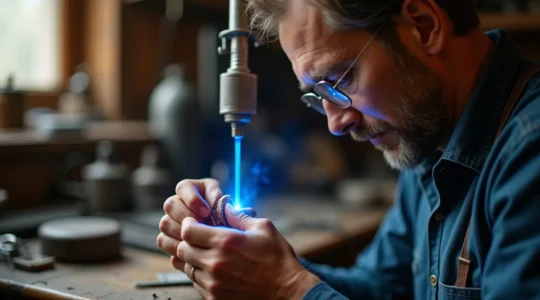
Laser Welding vs. Torch Soldering: Which Method Saves Your Antique Ring?
The true preservation of an antique ring depends not on the repair itself, but on a deep understanding of its original materials and craftsmanship. Conventional torch soldering introduces excessive heat, which can permanently damage brittle Victorian alloys and fragile settings….
Read more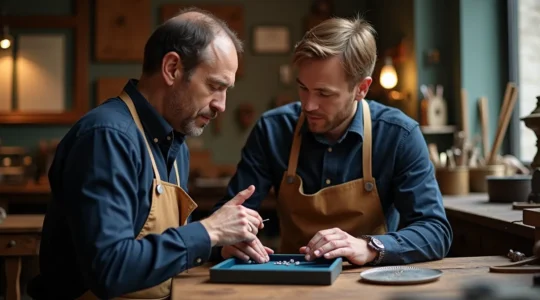
How to Commission a Bespoke Ring in Hatton Garden without Overpaying?
In summary: Translate your vision into a practical mood board focusing on specific components, not just finished rings. Identify true manufacturers by asking about their on-site workshop and maker’s marks, avoiding simple resellers. Understand the cost and design implications of…
Read more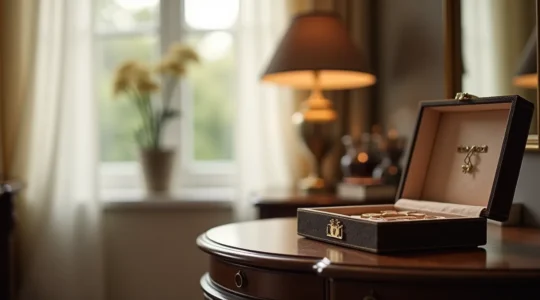
Why Your Home Insurance is a Liability for Your Luxury Jewellery Collection
Your standard home insurance is not protecting your valuable jewellery; it’s actively exposing you to significant financial loss through carefully worded exclusions. Strict “Single Item Limits” mean a £10,000 ring might only be covered for a fraction of its worth,…
Read more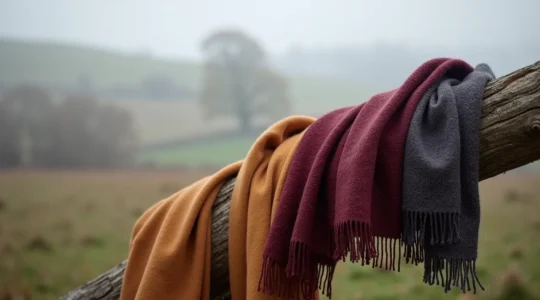
Mastering Seasonal Scarves: A Guide to Staying Stylish and Dry from Crisp Autumns to Wet English Winters
The secret to year-round scarf success in Britain isn’t owning more, but understanding the material science of how fibres handle damp and wind. Merino wool offers superior performance in damp conditions compared to warmer, but more delicate, cashmere. A curated…
Read more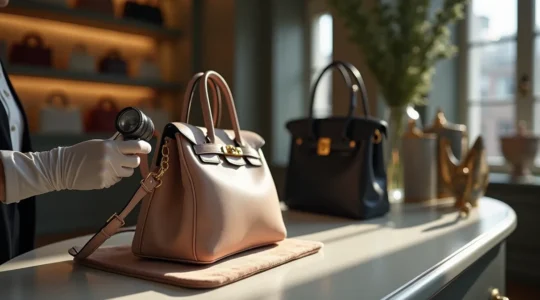
How to Authenticate Second-Hand Designer Bags in London: An Insider’s Guide
Investing in a pre-loved designer bag in London requires more than an eye for style; it demands the strategic mindset of a financial asset manager. Authentication goes beyond sight, using technology and even scent to unmask “superfakes” that fool the…
Read more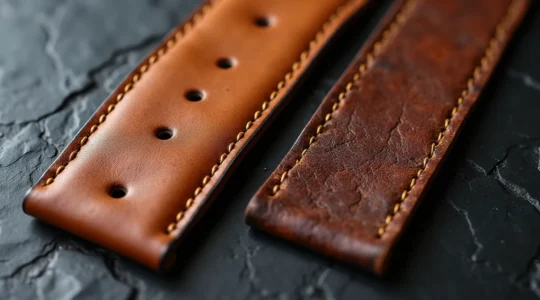
Full Grain vs. Genuine Leather: Choosing a Belt That Lasts 10 Years
A quality full-grain leather belt is a decade-long investment, not a disposable accessory that fails within a year. ‘Genuine Leather’ is a misleading marketing term for low-grade material specifically processed to have a short lifespan. The secret to longevity lies…
Read more