Watches & Smartwatches
The world of wrist-worn timepieces spans centuries of craftsmanship and cutting-edge technology. From the intricate mechanical movements of Swiss and German manufactures to the sophisticated sensors in contemporary smartwatches, this category represents both timeless artistry and rapid innovation. Whether you’re considering a luxury watch as an alternative asset, seeking to understand the technical excellence behind a mechanical calibre, or evaluating which smartwatch ecosystem best serves your professional and health needs, the landscape can appear overwhelmingly complex.
This comprehensive resource bridges the gap between traditional horology and modern wearable technology. We’ll explore how luxury watches function as investment vehicles in the UK market, decode the exclusive culture of London’s haute horlogerie boutiques, demystify the technical aspects that determine a movement’s value, and highlight exceptional alternatives to the industry’s dominant names. Equally, we’ll examine how smartwatches have evolved into indispensable tools for professional productivity, health monitoring, and connected living, whilst addressing crucial considerations around medical reliability and accessibility.
Luxury Watches: Investment Value and Market Navigation
The UK market for luxury timepieces has matured into a sophisticated alternative investment sector. Unlike traditional assets such as equities or gilts, fine watches offer tangible ownership combined with potential capital appreciation, particularly for pieces from established manufactures with proven historical performance.
Understanding Watch Investment Fundamentals
Historical data reveals that certain references from prestigious manufactures have appreciated significantly over decades, occasionally outperforming conventional investment portfolios. However, this asset class demands specialist knowledge. Key factors influencing value include production numbers, movement complications, case materials, and provenance documentation. Your first investment piece should ideally combine relative accessibility with established desirability—think sports models from recognised houses rather than obscure limited editions.
The London Boutique Experience
Acquiring highly sought-after references through authorised dealers, particularly in London’s Mayfair and Knightsbridge districts, operates according to unwritten cultural codes. Boutique relationships matter significantly: establishing yourself as a serious collector through purchase history, demonstrating genuine enthusiasm beyond speculation, and understanding the concept of manufactured scarcity all influence allocation decisions. The distinction between official retail channels and the grey market affects not only pricing but warranty coverage and long-term value retention.
Avoiding Costly Pitfalls
The secondary market harbours risks that can devastate investment returns. Sophisticated counterfeits have reached alarming quality levels, whilst “Frankenwatches”—timepieces assembled from non-original components—appear increasingly convincing to untrained eyes. Verification requires examining movement finishing, case hallmarks, and dial printing under magnification, ideally with independent authentication before significant purchases. When planning eventual resale, timing relative to market cycles and model discontinuations can substantially impact realised gains.
Mechanical Excellence: Understanding and Maintaining Precision
The beating heart of traditional watchmaking remains the mechanical movement—a miniature engine governed by physics, metallurgy, and centuries of accumulated expertise. Appreciating what distinguishes an exceptional calibre from a mediocre one transforms how you evaluate timepieces.
Movement Architecture and Finishing
A movement’s construction reveals its pedigree. Examination points include jewel count and placement, escapement type, balance wheel construction, and decoration quality. Hand-applied finishes such as Côtes de Genève, perlage, and anglage demonstrate artisanal commitment beyond mere functionality. The power reserve—how long a fully wound watch runs autonomously—reflects both barrel capacity and escapement efficiency, typically ranging from 38 hours in basic calibres to eight days or more in advanced designs.
Chronometric Performance and Certification
Precision varies dramatically across mechanical watches. COSC certification guarantees accuracy within -4/+6 seconds daily under laboratory conditions, whilst manufactures’ internal standards often exceed this. Chronometric drift occurs due to mainspring tension variation, positional effects, temperature fluctuations, and lubrication degradation. Understanding these factors allows realistic expectations: even exceptional mechanical watches cannot match quartz accuracy, but their appeal lies elsewhere—in the philosophical and aesthetic dimensions of purely mechanical timekeeping.
Maintenance for Longevity
Proper care extends a mechanical watch’s lifespan across generations. Regular servicing intervals—typically every five to seven years—prevent accelerated wear from degraded lubricants. Between services, correct winding technique (for manual movements), appropriate wearing patterns (for automatics), and protection from magnetic fields and shocks preserve optimal performance. Warning signs necessitating immediate attention include sudden accuracy loss, difficulty winding, or irregular running sounds.
Beyond Household Names: Discovering Alternative Watchmakers
Whilst Swiss manufactures dominate popular consciousness, exceptional horology flourishes across other traditions. Exploring these alternatives offers both superior value and genuine exclusivity absent from omnipresent mainstream references.
German Precision Engineering
The Glashütte region cultivates a distinct aesthetic philosophy: restrained design, immaculate finishing, and technical innovation often overshadowed by Swiss marketing dominance. German watchmaking emphasises functional purity over ostentation, attracting connoisseurs who appreciate subtlety. These manufactures frequently offer superior movement finishing at price points below Swiss equivalents with comparable complications.
Japanese Technical Mastery
Japanese horology combines meticulous craftsmanship with technological innovation. Beyond quartz movements—a category Japan revolutionised—their mechanical offerings demonstrate extraordinary finishing and proprietary technologies. High-beat movements, Spring Drive hybrid regulation, and micro-artist studios producing limited annual quantities represent genuine alternatives to European dominance, often accompanied by refreshing accessibility and service efficiency.
Resurgent Independent Houses
Numerous historically significant manufactures have experienced renaissance periods, offering collectors opportunities before broader market recognition drives prices upward. Researching these houses—examining their archives, understanding what precipitated decline and revival, and evaluating current ownership stability—can identify exceptional value. The key lies in distinguishing authentic heritage resurrections from opportunistic brand acquisitions trading solely on historical names.
Smartwatches: Professional Productivity and Connected Living
Modern smartwatches have transcended fitness tracking novelties to become sophisticated productivity tools and home automation interfaces. Selecting the appropriate ecosystem and configuring it thoughtfully determines whether these devices enhance or diminish professional effectiveness.
Professional Environment Integration
Corporate settings demand discretion and efficiency. Notification filtering becomes essential: configuring which communications warrant wrist alerts prevents constant distraction whilst ensuring critical messages reach you during meetings when accessing phones appears unprofessional. Voice dictation capabilities enable discreet message responses, though mastering when this remains appropriate versus appearing rude requires cultural sensitivity. Operating system choice—whether watchOS, Wear OS, or proprietary platforms—affects application availability, particularly for industry-specific tools and enterprise security requirements.
Smart Home Control
Wrist-based home automation centralises control over lighting, climate, security systems, and appliances. The practical advantage emerges during morning routines: sequential automation triggered from your wrist—adjusting thermostats, starting coffee machines, disarming alarms—streamlines departure preparation. However, ecosystem compatibility matters significantly. Ensuring your chosen smartwatch integrates with existing home platforms (HomeKit, Google Home, Alexa) prevents frustrating limitations. Security considerations cannot be overlooked: wrist-based door locks and alarm controls require robust authentication to prevent vulnerabilities.
Wearable Health Technology: Fitness, Medical Monitoring and Accessibility
Contemporary smartwatches incorporate medical-grade sensors previously confined to clinical settings. Understanding their capabilities, limitations, and optimal usage transforms them from novelties into genuinely useful health tools.
Cardiovascular Training Optimisation
For urban fitness enthusiasts, particularly in UK cities where air quality fluctuates, correlating pollution levels with heart rate data enables intelligent training adjustments. Heart rate zone training—maintaining effort within specific percentage ranges of maximum heart rate—maximises cardiovascular adaptation whilst preventing overtraining syndrome. Modern devices track HRV (heart rate variability),VO2 max estimations, and recovery metrics, providing objective data to inform training periodisation. Scheduling outdoor sessions according to air quality forecasts, readily available through environmental monitoring services, protects respiratory health whilst maintaining fitness progression.
Medical Monitoring Reliability
The critical question remains: how trustworthy are consumer wearables for health decisions? PPG (photoplethysmography) technology—which illuminates skin to detect blood volume changes—underpins most wrist-based measurements. Accuracy depends heavily on sensor positioning, skin tone, ambient temperature, and movement. Single-lead ECG capabilities can detect atrial fibrillation but cannot replace twelve-lead diagnostic equipment. Blood pressure measurements from wrist devices show promising correlation with traditional cuffs but require individual calibration and consistent measurement conditions. These tools excel at trend identification rather than absolute diagnostic precision—useful for prompting medical consultation rather than replacing it.
Accessibility and Inclusive Design
Smartwatches offer transformative potential for users with diverse accessibility needs. Display customisation—increasing font sizes, enhancing contrast ratios, and enabling high-visibility colour schemes—assists those with visual impairments. Haptic feedback and voice output provide non-visual interaction modes. Case size selection affects usability: larger displays improve readability but may prove uncomfortable for smaller wrists. Gesture controls and customisable shortcuts reduce reliance on precise touchscreen interaction. Thoughtful configuration transforms these devices into genuinely inclusive tools rather than technology accessible only to able-bodied users.
Whether your interest lies in the investment potential of mechanical horology, the technical appreciation of centuries-old craftsmanship, or the practical advantages of contemporary wearable technology, this diverse category offers depth worth exploring. Each path—from understanding boutique allocation dynamics to optimising smartwatch health features—rewards specialist knowledge with enhanced enjoyment and practical benefit.

How to Customise a Smartwatch for Visually Impaired Users in the UK: A Practical Guide
In summary: A smartwatch is more than a gadget; it’s a “digital prosthesis” that requires thoughtful, UK-specific customisation to be truly effective. Features like VoiceOver and Double Tap are not just functions but tools for navigating daily life, from the…
Read more
Are Smartwatch Advanced Sensors Accurate Enough for NHS Standards?
Smartwatch health alerts are not direct diagnoses, but rather flags for ‘signal integrity’ issues that require NHS validation. Consumer wearables are powerful screening tools, but they have known ‘diagnostic blind spots’ compared to clinical-grade equipment. Accuracy is heavily influenced by…
Read more
Your Wrist is the New Command Centre: A Guide to Architecting a UK Smart Home
The greatest challenge for UK smart home owners isn’t a lack of devices, but a fragmented control system; your smartwatch is the key to unifying it into a predictive, ambient ecosystem. True wrist-based control goes beyond simple on/off commands, leveraging…
Read more
Beyond the Fumes: A Runner’s Guide to Peak Cardio Health in London’s Pollution
Running in London isn’t about avoiding pollution—it’s about treating it as a measurable training stressor. High pollution days actively reduce your recovery capacity, a fact visible in your morning heart rate. Training intensity must be calibrated to daily Air Quality…
Read more
Can a Smartwatch Replace Your PA in a Canary Wharf Office?
The key to smartwatch productivity isn’t seeing more information; it’s controlling the flow of information to protect your focus. A smartwatch acts as a “productivity firewall,” filtering low-value notifications before they break your concentration. For the Canary Wharf professional, it…
Read more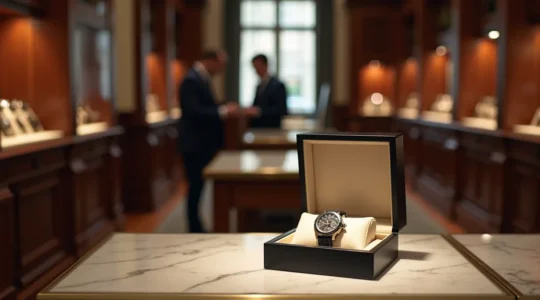
Beyond the Big Three: The Underrated Watch Houses for Discerning UK Collectors
For the true UK collector, the conversation has moved beyond the usual Rolex, Patek, and AP. Real distinction now lies in appreciating the brands that demonstrate technical legitimacy and quiet confidence. Technical mastery, like the finishing of A. Lange &…
Read more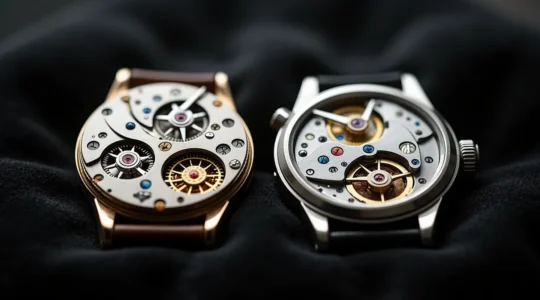
In-House vs. ETA Calibres: Which Movement Holds Value Better?
Contrary to popular belief, an in-house movement is not an automatic guarantee of better value; the true worth is a trade-off between prestige and the practical economics of ownership. In-house movements offer exclusivity and superior specifications like longer power reserves,…
Read more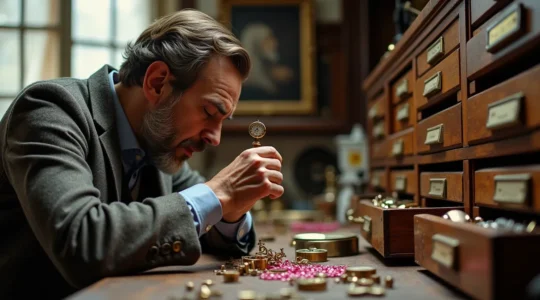
Why Does Your Mechanical Watch Lose Time After 5 Years?
Contrary to common belief, your watch losing time after five years isn’t just a sign it needs a generic service. It is often a symptom of specific, preventable stresses like environmental magnetism and lubricant degradation, particularly prevalent in the UK….
Read more
How to Build a Relationship with Bond Street Authorised Dealers?
Securing a top-tier watch from a Bond Street AD isn’t about luck or patience; it’s about proving you are a strategic asset to their business. Empty “Exhibition Only” windows are a filtering mechanism designed to identify serious, long-term clients, not…
Read more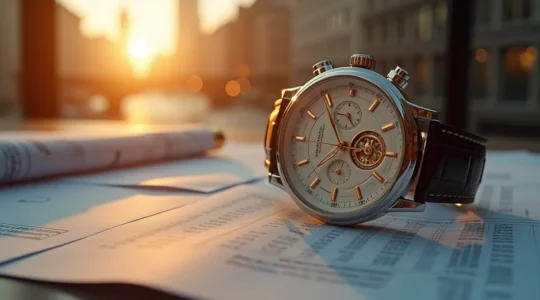
Why Invest in Luxury Timepieces Instead of ISA Savings Accounts?
Luxury watch investment offers a potent, tangible hedge against inflation and a vehicle for significant capital appreciation that traditional cash ISAs currently cannot match. Success depends on treating timepieces as a distinct asset class, governed by specific rules of market…
Read more