Beauty & Skincare
The beauty and skincare landscape has evolved dramatically, shifting from superficial quick fixes to a deeper understanding of skin biology and holistic wellness. Whether you’re navigating the humidity of Manchester, the hard water of London, or the crisp coastal air of Brighton, your skin, hair, and nails face unique challenges that require informed, targeted care rather than one-size-fits-all solutions.
This comprehensive resource addresses the fundamental principles that underpin effective beauty routines, from protecting your skin’s delicate barrier to adapting your haircare for British water quality. You’ll discover why understanding ingredients matters more than product count, how climate directly impacts hydration needs, and which evidence-based techniques deliver genuine results. The goal isn’t to overwhelm you with endless products, but to equip you with the knowledge to make confident decisions tailored to your individual needs.
Understanding Your Skin Barrier: The Foundation of Healthy Skin
Your skin barrier functions like a brick wall, with skin cells as bricks and lipids as mortar. When intact, it locks moisture in whilst keeping irritants out. However, the British climate—with its fluctuating temperatures, central heating in winter, and unpredictable humidity—constantly challenges this delicate structure.
Recognising the Signs of a Compromised Barrier
A damaged barrier manifests in ways many mistake for “sensitive skin”. Look for persistent tightness, stinging when applying products, increased reactivity to previously tolerated ingredients, or that rough, sandpaper-like texture. Over-exfoliation ranks as the most common culprit, particularly with the recent popularity of daily acid toners and multiple active ingredients.
The skin’s microbiome—billions of beneficial bacteria living on the surface—plays a crucial role in barrier health. Harsh cleansers and aggressive exfoliation can disrupt this ecosystem, triggering inflammation and sensitivity. Recent research highlights that restoring balance requires patience, typically taking four to six weeks of gentle care.
The Restoration Strategy
Repairing a compromised barrier demands a strategic pause on all exfoliants, retinoids, and potent actives. Focus instead on three key elements:
- Humectants like hyaluronic acid and glycerin that draw water into the skin
- Barrier-repairing ingredients such as ceramides, cholesterol, and fatty acids
- Occlusive agents (squalane, mineral oil) that seal everything in and prevent transepidermal water loss
Think of this approach like repairing a leaky roof before redecorating the interior—without a solid foundation, even the best active ingredients cannot work effectively.
Mastering Hydration in the British Climate
The UK’s temperate maritime climate presents a paradox: high humidity levels yet persistent skin dehydration, particularly during winter months when indoor heating strips moisture from the air. Understanding how to adapt your hydration strategy seasonally makes the difference between plump, comfortable skin and chronic tightness.
The Three-Step Hydration Approach
Effective hydration isn’t about piling on thick creams. It follows a specific sequence: humectants first to attract water, followed by emollients to soften, then occlusives to seal. Applying products to damp skin—not bone-dry—enhances absorption significantly, as humectants need water molecules to bind to.
British tap water, particularly in hard-water areas like London, the South East, and parts of the Midlands, contains high concentrations of calcium and magnesium. These minerals leave a residue that can interfere with product absorption. A simple splash of micellar water after cleansing can remove this film, allowing your serums and moisturisers to penetrate more effectively.
Texture Matters: Matching Products to Conditions
Many assume richer textures equal better hydration, but this isn’t always true. A lightweight gel containing hyaluronic acid layered under a facial oil often outperforms a single heavy cream. During humid summer months, gel-based formulations prevent that suffocating feeling, whilst winter demands more occlusive protection to combat harsh winds and heated indoor environments.
Advanced Anti-Ageing: From Retinoids to Facial Massage
Preventing premature ageing requires understanding the two processes at play: intrinsic ageing (genetics and time) and extrinsic ageing (environmental damage). Whilst you cannot control the former, strategic intervention dramatically impacts the latter—and British weather, with its limited sunshine and pollution in urban areas, creates specific considerations.
Retinoids: Navigating the Gold Standard
Vitamin A derivatives remain the most researched anti-ageing ingredients, accelerating cell turnover and stimulating collagen production. However, their potency causes confusion. Retinol, retinaldehyde, and prescription tretinoin sit on a spectrum of strength and irritation potential.
The “sandwich method” has revolutionised retinoid tolerance: apply moisturiser first, then retinoid, then another moisturiser layer. This buffering technique reduces irritation whilst maintaining efficacy—particularly valuable during the adjustment period. Start with twice-weekly application, gradually increasing frequency over eight to twelve weeks.
The Non-Negotiable: SPF
A common misconception holds that British weather doesn’t warrant daily sun protection. Yet UVA rays—responsible for premature ageing—penetrate clouds and glass year-round. Think of SPF not as a summer product but as the final step in every morning routine, even on overcast December days. Mineral filters (zinc oxide, titanium dioxide) suit sensitive skin, whilst chemical filters offer more elegant textures under makeup.
Facial Massage: More Than Relaxation
The lymphatic system, unlike the circulatory system, lacks a pump and relies on manual stimulation to drain fluid. Facial massage techniques, particularly using gua sha tools or simply fingertips, reduce puffiness and improve product absorption by increasing microcirculation.
The cardinal rule: always work upwards and outwards, never dragging downwards which can exacerbate sagging. Pair massage with a facial oil rather than dry skin to prevent tugging. Even sixty seconds each morning, focusing on the jawline and under-eye area, yields visible depuffing benefits.
Haircare Beyond Shampoo: Tackling British Water and Scalp Health
British water quality profoundly impacts hair health, yet this connection often goes unrecognised. Hard water, prevalent across much of England, causes mineral accumulation on the hair shaft, leading to dullness, tangling, and colour fade. Meanwhile, scalp health—the foundation of healthy hair growth—requires as much attention as facial skincare.
Understanding and Combating Hard Water Effects
Calcium and magnesium ions in hard water bind to hair proteins, creating a coating that prevents moisture penetration and makes hair feel rough and straw-like. You might notice your shampoo doesn’t lather well or your conditioner sits on the surface rather than absorbing—classic hard water symptoms.
Solutions range from installing a shower filter (which softens water at the source) to incorporating a chelating treatment fortnightly. Apple cider vinegar rinses work by lowering pH and dissolving mineral deposits, though dedicated chelating shampoos offer more concentrated results. Simply dilute the vinegar (one part to four parts water), apply after shampooing, leave for two minutes, then rinse thoroughly.
Scalp Care: The Overlooked Foundation
Your scalp is skin, and it responds to the same principles: gentle cleansing, balanced pH, and avoiding stripping. Surfactants—the cleansing agents in shampoo—vary dramatically in harshness. Sulphates (SLS, SLES) clean aggressively but can trigger sensitivity, whilst gentler alternatives (coco-glucoside, decyl glucoside) cleanse without stripping natural oils.
Signs of scalp intolerance include persistent itching, flaking (not just dandruff—true irritation), or hair that feels greasy by evening despite morning washing. This often indicates over-cleansing, which triggers rebound oil production. Counterintuitively, washing less frequently with a gentler cleanser often resolves the issue within three to four weeks.
Deep Conditioning on a Budget
Understanding hair porosity—how readily your hair absorbs and retains moisture—transforms conditioning effectiveness. High porosity hair (often damaged or chemically treated) absorbs products quickly but loses moisture just as fast. Low porosity hair resists absorption, causing products to sit on the surface.
Rather than expensive treatments, boost standard conditioners with a few drops of hydrolysed protein (for strength) or glycerin (for moisture). The key lies in balancing protein and hydration—too much protein causes stiffness and breakage, whilst excessive moisture leads to hygral fatigue, where hair swells and contracts repeatedly, weakening the structure.
Hand and Nail Care: Beyond the Polish
Hands reveal age as readily as faces, yet receive fraction of the attention. Between frequent washing (intensified in recent years), harsh soaps, and UV exposure through car windows and office desks, hands face relentless assault on their thin, oil-poor skin.
The Hidden UV Risk During Manicures
Gel manicures utilise UV or LED lamps to cure polish—the same UVA rays that age facial skin. Whilst exposure time seems brief (typically two to three minutes per hand), cumulative damage adds up, particularly for regular clients. UV exposure from these lamps has raised concerns among dermatologists.
Simple protection involves applying broad-spectrum SPF 30 or higher to hands twenty minutes before appointments, or purchasing UV-protective gloves with fingertips removed. These small steps provide significant protection over years of regular manicures.
Repairing Damaged Nails
Nail damage from gel removal, acrylics, or mechanical trauma manifests as peeling, splitting, or that distinctive paper-thin flexibility. Nails are composed of keratin layers, and once damaged, they cannot heal—you must grow out healthy nail from the base.
Accelerate recovery with cuticle oils rich in vitamin E and jojoba oil, applied twice daily and massaged into the nail plate and surrounding skin. This stimulates microcirculation to the nail matrix (where growth occurs) whilst providing flexibility to prevent further splitting. Most importantly, keep nails short during recovery—length adds leverage that exacerbates weakness.
Streamlining Your Beauty Routine: The Art of Doing Less
The beauty industry thrives on complexity, yet effective routines often embrace simplicity. The “less is more” philosophy isn’t about deprivation—it’s about strategic selection of products that deliver multiple benefits, reducing both financial investment and time commitment whilst maintaining results.
Identifying Multi-Tasking Heroes
Multi-purpose products eliminate redundancy without sacrificing efficacy. A tinted moisturiser with SPF 30 replaces three separate steps. A cream blush works on lips. A rich balm serves as cuticle treatment, lip care, and dry patch remedy. These choices particularly suit time-poor mornings or simplified travel routines.
When comparing brands, look beyond marketing to actual ingredient concentrations and formulation quality. Premium prices don’t always correlate with superior results—some affordable pharmacy brands contain identical active ingredients at comparable percentages to luxury counterparts. Learning to read ingredient lists (where components are listed by concentration) empowers more informed purchasing.
Proper Storage Extends Product Life
Many products degrade faster than their expiry dates suggest when stored incorrectly. Vitamin C serums oxidise in light and heat, turning brown and losing potency. Retinoids break down with UV exposure. SPF separates when subjected to temperature fluctuations.
Simple storage optimisation—keeping products in cool, dark bathroom cabinets rather than sunny windowsills, decanting pump products rather than dipping fingers into jars, and noting opening dates—prevents waste and maintains efficacy. This mindful approach saves money whilst ensuring you actually receive the promised benefits from each product.
Building an effective beauty and skincare routine isn’t about accumulating products or following trends—it’s about understanding your unique needs, the environment you live in, and the science behind what actually works. Start with the fundamentals of barrier protection and appropriate hydration, introduce actives gradually and strategically, and remember that consistency with a simplified routine outperforms sporadic use of dozens of products. Your skin, hair, and nails will reveal the difference within weeks.

The 3-Step “Skinimalism” Routine That Saves £200 a Year?
In summary: Adopting a 3-step “skinimalism” routine can save you £250-£450 annually and significantly reduce plastic waste. Focus spending on a high-quality treatment/serum and save on basics like cleansers and moisturisers. Maximise product value by using multi-tasking techniques and ensuring…
Read more
Healing the Nail Bed: Your Complete Recovery Guide After Years of Acrylics
In summary: The extreme weakness, redness, and sensitivity you feel are likely due to mechanical over-filing that has thinned your natural nail plate, not a chemical reaction. True recovery is an active process combining gentle care, targeted products like penetrating…
Read more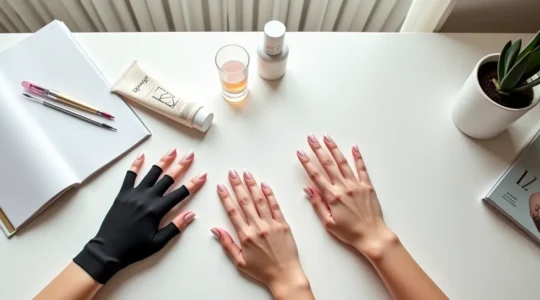
Gel Manicures: How to Prevent UV Damage to Your Hands?
The cumulative UV exposure from gel manicures is a documented cause of premature hand ageing, but it is entirely manageable with a proactive skin health protocol. Protect skin with broad-spectrum SPF 50+ sunscreen or certified UPF 50+ gloves during every…
Read more
Postpartum Hair Loss: When Does Shedding Become a Medical Concern?
Postpartum hair loss is usually a temporary phase, but it becomes a medical issue when it’s prolonged or worsened by underlying factors like specific nutritional deficiencies or chronic stress. The vast majority of shedding is due to a normal hormonal…
Read more
Argan or Jojoba: Which Oil Stops Frizz Without Greasing Fine Hair?
The secret to taming fine, frizzy hair isn’t choosing one miracle oil, but mastering a strategic system of application that respects your hair’s delicate structure. Jojoba oil is ideal for scalp regulation and daily frizz control due to its lightweight,…
Read more
Kitchen Oils vs. Salon Masks: The Truth About Hair Penetration
The effectiveness of a hair treatment is determined by molecular science, not its price tag or whether it comes from a kitchen or a lab. Small-molecule oils (like coconut) can penetrate the hair shaft to reduce protein loss, while large-molecule…
Read more
The Sulphate-Free Myth: Is It Right for Your Non-Coloured Hair?
For most people in the UK with non-coloured hair, the “sulphate-free” trend is a distraction from the real issue: buildup. Sulphates are often necessary to remove stubborn mineral deposits from hard water and non-soluble silicones from styling products. An itchy,…
Read more
Why London’s Hard Water Makes Your Hair Feel Like Straw (And a Trichologist’s Protocol to Fix It)
If your hair feels constantly dry, brittle, and lifeless despite using hydrating products, the problem isn’t a lack of moisture—it’s a chemical reaction with London’s hard water. Mineral deposits (limescale) from hard water form a physical cast around your hair,…
Read more
A Dermatologist’s Guide to Starting Retinol Without the ‘Purge’ Phase
The key to starting retinol isn’t avoiding the “purge,” but proactively managing a predictable skin acclimatisation process with a clear, step-by-step protocol. Success relies on understanding the 12-week timeline, choosing the right active (like retinaldehyde), and mastering buffering techniques. Non-negotiable…
Read more
Why Exfoliating Too Often Destroys Your Epidermis and Causes Breakouts
If your skin is suddenly shiny, tight, and sensitive, you’ve likely compromised your skin barrier through over-exfoliation. The unnatural shine is a sign of inflammation and transepidermal water loss (TEWL), not oiliness. Recovery requires an active “Barrier Reconstruction Project,” not…
Read more