
Running in London isn’t about avoiding pollution—it’s about treating it as a measurable training stressor.
- High pollution days actively reduce your recovery capacity, a fact visible in your morning heart rate.
- Training intensity must be calibrated to daily Air Quality Index (AQI); forcing high-intensity workouts on bad air days is counterproductive.
Recommendation: Shift your focus from raw mileage to ‘Green Minutes’—time spent training in low-pollution zones—for true health gains.
You feel it on a run along a congested London road: that slight burn in your lungs, the feeling that you’re working harder than you should be. It’s the urban athlete’s paradox: striving for peak health while inhaling air that works against you. The common advice is reactive and frankly, a bit simplistic. “Check the AQI,” they say. “Run in parks.” While not wrong, this advice treats pollution as a simple on/off switch, an external nuisance to be dodged. It misses the fundamental point that for a city athlete, pollution isn’t just an inconvenience; it’s a physiological load that directly impacts performance and recovery.
But what if you could stop just reacting and start managing it strategically? What if you could learn to interpret your body’s signals—your heart rate, your sleep quality, your morning fatigue—as a direct conversation with London’s environment? The true key to thriving as a runner or cyclist here isn’t just about finding cleaner air; it’s about understanding how to calibrate your training to the air you have. It’s about mastering the art of “environmental dosing,” turning what feels like a limitation into a data point for smarter training.
This guide will transform your approach. We won’t just tell you *when* and *where* to run. We’ll show you *how* to adjust your intensity, what performance metrics truly matter in a polluted environment, and how to use your own body’s feedback to build a resilient cardiovascular system. We will explore how to protect your heart, optimise your efforts for goals like a 10km race, and even decode the hidden stressors that affect your recovery, from air quality to water hardness. Get ready to train smarter, not just harder.
To navigate this complex urban training landscape, we have structured this guide to address your most pressing concerns. The following sections will provide a clear roadmap, from understanding the immediate impact of pollution on your heart to implementing long-term strategies for sustainable performance.
Summary: A Runner’s Guide to Peak Cardio Health in London’s Pollution
- Why Does Your Heart Beat Faster During a Run Along the Thames at Peak Times?
- How to Calibrate Your Intensity Zones to Burn Fat Without Burning Out?
- VO2 Max or Lactate Threshold: Which Metric to Prioritise for 10km Progress?
- The Mistake of Ignoring a High Resting Heart Rate in the Morning
- When to Run in London: Sequencing Your Outings According to Pollution Alerts
- How to Detect Sleep Apnea Using Nocturnal SpO2 Sensors?
- Why Do Calcium and Magnesium Bind to the Hair Fibre?
- Tracking Fitness Performance: Why 10,000 Steps Isn’t Enough for Weight Loss
Why Does Your Heart Beat Faster During a Run Along the Thames at Peak Times?
That feeling of your heart thumping harder than usual during a rush-hour run along Victoria Embankment is not just in your head. It’s a direct physiological response to an increased environmental load. When you exercise in polluted air, your body is fighting a battle on two fronts: the physical exertion of the run and the internal stress caused by inhaling particulates like Nitrogen Dioxide (NO2) and PM2.5. These pollutants trigger an inflammatory response in your respiratory system and bloodstream, forcing your cardiovascular system to work significantly harder to deliver oxygen to your muscles. In essence, your body is allocating resources to combat the pollution, leaving less in the tank for your performance.
This isn’t just a feeling; it’s measurable. The air quality difference between a busy road and a quieter side street is stark. Studies confirm that moving your run just one block away from a major artery can dramatically reduce your “environmental dose.” For instance, a recent report highlighted 46% lower roadside NO2 concentrations in central London following targeted interventions, proving how sensitive your exposure is to your exact route. During exercise, your breathing rate and volume increase, meaning you deliver a much larger dose of these pollutants to your lungs than you would while walking.
Think of it as adding invisible weight to your workout. A run that feels like a Zone 3 effort on a clean air day might push your heart rate into Zone 4 territory along a congested route, even at the same pace. Acknowledging this additional physiological stress is the first step toward smarter urban training. It’s not a sign of declining fitness; it’s a sign that your body is working overtime, and a signal that you need to adjust your strategy, not just push through the discomfort.
How to Calibrate Your Intensity Zones to Burn Fat Without Burning Out?
The standard advice for fat burning is to train in “Zone 2,” a low-to-moderate intensity where your body primarily uses fat for fuel. However, for a London athlete, a generic heart rate chart is dangerously incomplete. You must practice cardio-respiratory calibration, adjusting your effort based on the day’s environmental load. On a high-pollution day, your body is already under systemic stress, so what your watch calls Zone 2 might actually be placing a Zone 3 or higher demand on your system. Forcing the issue leads to burnout and increased inflammation, not fat loss.
The solution is to prioritise true aerobic effort over hitting a specific pace or heart rate number. On days when the Air Quality Index (AQI) is moderate to high, your primary goal is to minimise your “environmental dose” of pollutants. This means reducing both the duration and, crucially, the intensity of your outdoor sessions. High-intensity work requires deep, rapid breathing, which dramatically increases the volume of particulates you inhale. Instead, focus on shorter, genuinely easy efforts in the cleanest air available, like the middle of a park, far from traffic.
A simple but powerful technique for these days is to maintain an intensity that allows for exclusive nasal breathing. This not only forces a lower intensity but also uses your nose’s natural filtration system to reduce particle inhalation. This approach ensures you stay in a true fat-burning and recovery state, protecting your lungs while still building your aerobic base. Save your high-intensity interval sessions for days with good air quality or take them indoors.
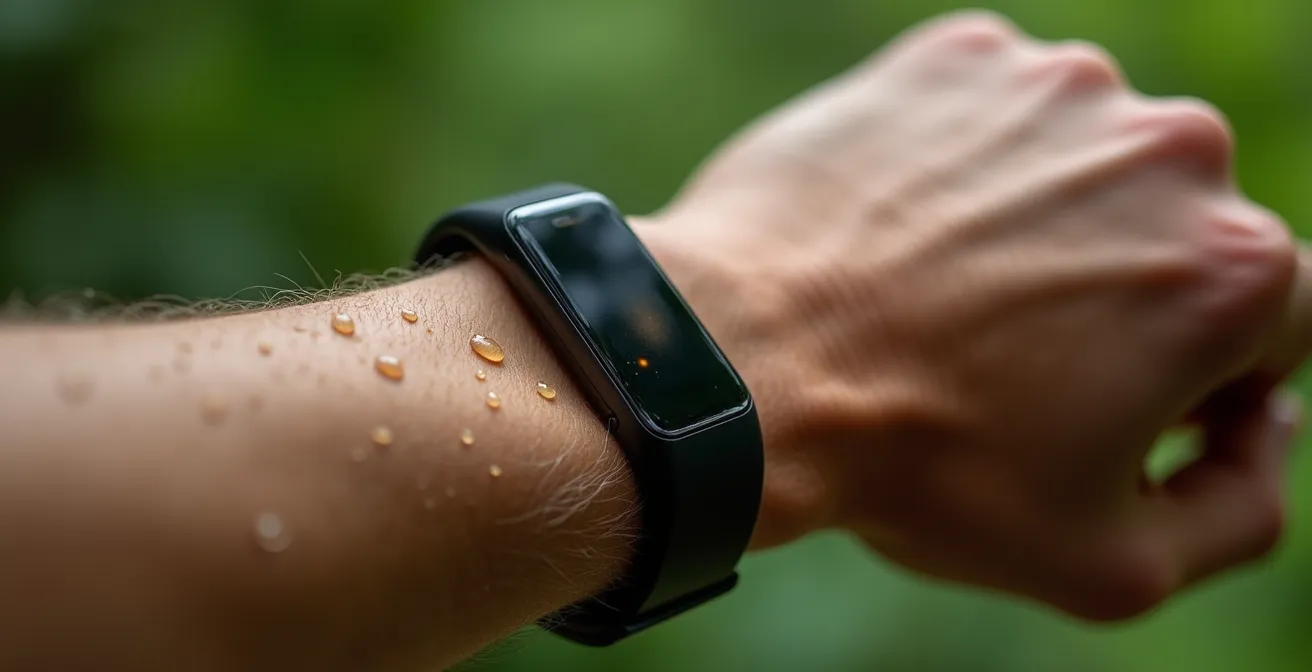
As you can see, the ideal setting for any training is one that minimises external stressors. By choosing green spaces and adapting your intensity, you allow your body to focus on the workout itself. This is the key to sustainable progress in an urban environment. Here’s a practical framework to put this into action.
Your Action Plan: Air Quality Adjusted Training Zones
- Check AQI levels: Before any outdoor training, check the London Air app or a similar service. If the AQI exceeds 100, strongly consider moving your workout indoors.
- Prioritise Zone 2 on pollution days: On moderate to high AQI days, keep outdoor activity short (under an hour) and limit intensity to what you can sustain with nasal breathing only for better air filtration.
- Schedule early morning sessions: Pollutants like ozone and particulate matter tend to build up during the day, making late afternoon the worst time for a run. Aim for early mornings when the air is generally cleaner and cooler.
- Create a weekly template: Plan your week around the forecast. For example: a high AQI Monday could be for indoor HIIT, a low AQI Tuesday for a long Zone 2 run in a park, and a moderate AQI Thursday for a shorter tempo run on quieter back streets.
- Collect data: Note how you feel during and after runs on different AQI days. Correlate this with your heart rate and recovery data to build your own personalised pollution response profile.
VO2 Max or Lactate Threshold: Which Metric to Prioritise for 10km Progress?
In the quest for a faster 10km, many runners get obsessed with increasing their VO2 max—the maximum amount of oxygen their body can utilise during intense exercise. It’s seen as the gold standard of aerobic fitness. However, for an athlete training in London’s polluted air, relentlessly chasing a higher VO2 max through maximal-effort intervals can be both counterproductive and harmful. This type of training demands gasping for huge volumes of air, which, on a typical London day, means inhaling a massive “environmental dose” of pollutants. This can lead to increased respiratory inflammation, oxidative stress, and a compromised immune system, ultimately hindering your progress.
A far smarter and safer strategy is to focus on improving your lactate threshold (LT). Your lactate threshold is the intensity of exercise at which lactate begins to accumulate in the blood faster than it can be removed. It represents the highest intensity you can sustain for a prolonged period (typically 30-60 minutes). Training to improve your LT involves “comfortably hard” efforts, often called tempo or threshold runs, which are sub-maximal. You’re breathing hard, but you’re not gasping. This is key: you can improve your sustainable race pace without resorting to the kind of maximal-intensity breathing that floods your lungs with pollutants.
By raising your lactate threshold, you’ll be able to run faster and longer before fatigue-inducing metabolites shut you down. This has a more direct impact on your 10km time than a marginal gain in VO2 max. As one leading expert on exercise and air pollution notes, the choice is clear for urban athletes.
For a London-based runner, improving Lactate Threshold is a more practical and safer goal than chasing VO2 Max, as high-intensity intervals require maximum oxygen intake which is counterproductive in polluted air.
– Dr. Michael Koehle, University of British Columbia Environmental Physiology Laboratory
The Mistake of Ignoring a High Resting Heart Rate in the Morning
You finish a tough week of training, feeling accomplished. But on Saturday morning, you wake up feeling sluggish, and your watch shows your resting heart rate (RHR) is 5-10 beats per minute higher than usual. Many athletes blame overtraining, but for the London runner, there’s often an invisible culprit: the accumulated physiological load from pollution. Ignoring this signal is one of the biggest mistakes you can make, as it’s a clear sign that your body is not recovering. This is your “recovery deficit” made visible.
A consistently elevated morning RHR, especially when paired with a low Heart Rate Variability (HRV), indicates that your autonomic nervous system is in a state of stress (a “fight-or-flight” response). Air pollution is a significant, non-obvious stressor that contributes to this. Inhaled pollutants cause systemic inflammation, which your body must work hard to manage, even while you sleep. This internal battle prevents your nervous system from shifting into the “rest-and-digest” mode necessary for deep recovery and adaptation.
Scientific evidence directly links pollution exposure to worsened recovery metrics. Research has shown that heart rate variability decreased for every 10 µg/m3 increase in PM2.5, for both short- and long-term exposure. This means that after a run on a polluted day, or even just from living in the city, your body’s ability to recover is measurably impaired. A high morning RHR is your body’s way of telling you it’s still fighting yesterday’s battles. Pushing through with another hard workout is a recipe for injury, illness, and burnout. Instead, treat it as a signal to prioritise recovery: opt for a very light activity, mobility work, or a complete rest day.
When to Run in London: Sequencing Your Outings According to Pollution Alerts
For the London runner, “when” and “where” you train are as important as “how hard.” Strategic scheduling is your most powerful tool for managing environmental load. The key is to think like a tactician, using real-time data and environmental knowledge to minimise your exposure. Your first step should always be to check the London Air app or the official government website before you even lace up your shoes. This gives you a clear, borough-by-borough view of the current AQI and, crucially, its forecast for the day.
Time of day is critical. As a general rule, air quality is best in the early morning, before the city’s traffic begins its daily churn. Pollutants like NO2 from vehicle exhaust and ozone (which forms in sunlight) accumulate throughout the day, often peaking in the late afternoon. An early morning run is almost always a better choice. Beyond timing, think about geography. Avoid “pollution canyons”—narrow streets flanked by tall buildings that trap vehicle emissions, common in the City and the West End. Instead, head for London’s great parks. Even within a park, your position matters. On a day with a westerly wind, the western side of Hyde Park will be cleaner than the eastern side bordering the traffic of Park Lane.

As the visual suggests, London is a patchwork of clean and polluted zones. Your goal is to navigate a path through the greenest areas. Fortunately, technology can help. Projects are underway to develop tools that find the least polluted routes for you. As research from The Alan Turing Institute shows, optimisation algorithms can use air quality forecasts to plot cleaner paths for walking and running. By combining data from the London Air app with navigation tools like Citymapper’s “Quiet Routes,” you can design a run that actively dodges the worst pollution hotspots, significantly reducing your total environmental dose.
How to Detect Sleep Apnea Using Nocturnal SpO2 Sensors?
As an urban athlete, you understand that recovery is where the magic happens. Yet, you can do everything right—eat well, manage training load, get to bed on time—and still wake up feeling unrefreshed. For some, the hidden culprit is sleep apnea, a condition where breathing repeatedly stops and starts during sleep. It’s a major disruptor of recovery, and the inflammation caused by daily pollution exposure can exacerbate it. Fortunately, the same wearables you use for training can now act as an early warning system, specifically through nocturnal SpO2 (blood oxygen saturation) monitoring.
Your SpO2 level measures the percentage of oxygen in your blood. For a healthy individual, this should remain stable, typically between 95% and 100%, throughout the night. During an apneic event, you stop breathing, and your blood oxygen level plummets. A modern fitness tracker or smartwatch can detect these dips. The key is not to panic over a single low reading, but to look for consistent, repeated patterns of desaturation. If your device consistently reports your SpO2 dropping below 92% multiple times during the night, it’s a significant red flag that warrants a conversation with your GP.
This is not a gimmick; the data has proven to be a reliable indicator. Studies have found that monitoring nocturnal SpO2 levels is a powerful predictor of health outcomes, and a clinical study highlighted that monitoring nocturnal SpO2 level could predict all-cause mortality, showing its clinical importance. For one London runner, paying attention to this data was a game-changer:
After months of elevated morning heart rate following polluted runs along the A40, a London marathon runner discovered through overnight SpO2 monitoring that they were experiencing significant oxygen dips. This led to a proper diagnosis of moderate sleep apnea, and subsequent CPAP treatment dramatically improved their recovery metrics and overall performance.
– London Runner’s Sleep Apnea Detection Journey
Why Do Calcium and Magnesium Bind to the Hair Fibre?
If you’re a dedicated London runner, you might have noticed an unwelcome side effect on your hair: it feels dull, brittle, and perpetually grimy, no matter how often you wash it. This isn’t just sweat and city dirt. It’s a chemical reaction happening on every strand, fueled by two of London’s defining characteristics: its notoriously hard water and its polluted air. Understanding this process is key to combating it and reducing another hidden source of physiological stress.
London’s water is rich in dissolved minerals, primarily calcium (Ca2+) and magnesium (Mg2+). These positively charged ions are constantly being deposited on your hair every time you wash it. On their own, they can make hair feel stiff. But the real problem occurs when you exercise. As you sweat, these mineral deposits on your scalp and hair are joined by airborne pollutants, particularly tiny particulate matter like PM2.5. This combination of minerals and pollutants forms a resilient, cement-like buildup that is incredibly difficult to remove with standard shampoos.
This buildup essentially suffocates the hair fibre and, more importantly, the scalp. It clogs follicles and creates a low-grade inflammatory environment. For an athlete, this is more than a cosmetic issue. Scalp inflammation contributes to the body’s total systemic oxidative stress, adding to the load your body is already managing from training and inhaling pollutants. It’s another small but cumulative factor that can impair your ability to recover fully. To protect your hair and reduce this stressor, you need a specific strategy to break down and remove these stubborn deposits.
Key Takeaways
- Pollution is a training load, not just a nuisance; manage it like you manage intensity and volume.
- On high AQI days, prioritise lower intensity (Zone 2) or indoor training to minimise your ‘environmental dose’.
- Monitor your morning Resting Heart Rate and HRV; they are key indicators of your body’s response to pollution-induced stress.
Tracking Fitness Performance: Why 10,000 Steps Isn’t Enough for Weight Loss
For years, the “10,000 steps a day” mantra has been the benchmark for an active lifestyle. While it encourages movement, for a health-conscious Londoner, this metric is fundamentally flawed. It’s a measure of quantity that completely ignores the critical factor of quality—the quality of the environment in which those steps are taken. Ten thousand steps along the permanently congested Euston Road are not the same as ten thousand steps through the clean air of Bushy Park. In the former, you may be doing more harm than good.
This isn’t speculation; it’s a physiological reality. The “London Step Count Fallacy” study provided a stark illustration of this principle. It’s not just about what you breathe in, but how your body reacts to it.
Case Study: The London Step Count Fallacy
An influential study conducted by King’s College London looked at the physiological impact of walking in different London environments. The study revealed that participants who walked 10,000 steps along the heavily polluted Euston Road exhibited significantly higher levels of cortisol (the stress hormone) and markers of inflammation compared to those who walked an equivalent number of steps through the green expanse of a Royal Park. This demonstrates that the location and quality of your activity matter more for your health outcomes than the mere quantity of steps.
This is the core thesis of this entire guide: you must evolve beyond simple metrics. Instead of chasing a step count, start tracking “Green Minutes”—the total time you spend each week exercising in parks, along canals, or on quiet routes with an AQI below 50. This metric shifts the focus from mindless quantity to mindful quality. Aim for at least 150 “Green Minutes” per week. View steps taken in high-pollution areas not as a health achievement, but as a necessary evil of urban transport. This change in perspective is the ultimate strategy for optimising cardio health in a city like London.
By integrating these strategies, you transform from a passive victim of urban pollution into an empowered athlete who uses environmental data to build a stronger, more resilient body. Start today by choosing one principle—whether it’s checking the AQI before your next run, focusing on nasal breathing, or planning a route through a park—and make it a non-negotiable part of your routine.
Frequently Asked Questions about Running and Health in London
Why does London’s hard water affect runners’ hair more?
When runners sweat, minerals from London’s notoriously hard water (high in calcium and magnesium) combine with airborne pollutants. As the official health data on London’s air explains, pollutants like PM2.5 have a particularly bad impact on health. This mixture forms resilient deposits on the hair and scalp, creating a buildup that is difficult to wash away and can lead to inflammation.
What’s the best post-run hair routine for London runners?
To combat the buildup, adopt a two-step process. First, consider a pre-shampoo rinse with filtered or bottled water to avoid adding more minerals. Second, use a chelating or clarifying shampoo once a week. These shampoos are specifically formulated to bind to minerals and pollutants, effectively stripping them from the hair. You can find effective options from major retailers like Boots or Cult Beauty designed for hard water areas.
How does pollution buildup on the scalp affect recovery?
The combination of mineral and pollutant deposits can cause significant scalp inflammation. This creates a state of localised oxidative stress. For an athlete, any source of stress adds to the body’s total systemic load. This means your body must allocate resources to dealing with scalp inflammation, which can potentially impair its ability to fully recover from demanding training sessions. A healthy scalp is a small but important part of a holistic recovery strategy.