Smartwatch health alerts are not direct diagnoses, but rather flags for ‘signal integrity’ issues that require NHS validation.
- Consumer wearables are powerful screening tools, but they have known ‘diagnostic blind spots’ compared to clinical-grade equipment.
- Accuracy is heavily influenced by physical factors you can control, such as device fit, skin type, and even the strap material you choose.
- Active user calibration against a clinical benchmark and understanding the context of an alert are essential for deriving meaningful health insights.
Recommendation: Treat your watch as a data-gathering assistant, not a doctor. Use its data to ask more informed questions during your GP consultations.
The sudden buzz on your wrist is sharp and insistent. It’s not a text message, but an alert: “Irregular Heart Rhythm Detected.” For a moment, your own heart might skip a beat. As smartwatches become ubiquitous, more and more people across the UK are facing this exact scenario. These devices promise a window into our health, tracking everything from heart rate to blood oxygen. But when a critical alert appears, the core question is one of trust: is this data accurate enough to rely on, or is it just creating unnecessary anxiety?
The standard advice is often a simple disclaimer: “smartwatches are not medical devices.” While true from a regulatory standpoint, this statement doesn’t help you, the user, to understand the nuances of the technology. It doesn’t explain why a reading might be flawed or how to improve its reliability. As an engineer working in the biomedical field, I can tell you that the difference between a useful insight and a false alarm often comes down to understanding the physical principles and limitations of the sensors on your wrist.
Instead of dismissing the data, the key is to become an educated interpreter. This involves learning about the factors that can disrupt sensor accuracy—what we call ‘signal integrity’—and knowing how to benchmark your device’s readings against a clinical standard. It’s about understanding what a single-lead ECG on your watch can and, more importantly, cannot see compared to the 12-lead ECG at a hospital. This article will move beyond the generic warnings and delve into the engineering and practical realities of using these devices as part of your health journey within the NHS framework. We will equip you with the knowledge to separate a genuine warning sign from a technological hiccup.
This guide breaks down the core factors affecting smartwatch sensor accuracy. We will explore the technical limitations, practical user tips, and the crucial differences between consumer tech and certified medical equipment to help you navigate your health data with confidence.
Contents: Understanding Smartwatch Accuracy for NHS Use
- Why do tattooed or dark skin types pose a problem for optical sensors?
- How to calibrate your watch with a traditional blood pressure cuff for reliable results?
- ECG of montre vs ECG clinique : quelles pathologies passent inaperçues ?
- The mistake of panicking over an unconfirmed atrial fibrillation alert
- Problème de signal : pourquoi porter la montre trop lâche fausse toutes les données ?
- Montre connectée ou bracelet médical : lequel choisir pour suivre une arythmie ?
- Why does chronic stress accelerate-t-il le vieillissement cellulaire ?
- Using Biometric Assistants to Monitor Stress Levels on the Tube Commute
Why Do Tattooed or Dark Skin Types Pose a Problem for Optical Sensors?
At the heart of most smartwatches is a technology called photoplethysmography, or PPG. It works by shining a green LED light onto your skin and measuring how much of that light is reflected back to a sensor. As your heart beats, blood pulses through your wrist, and since blood absorbs green light, the amount of reflected light changes. The watch’s algorithm translates these fluctuations into a heart rate. The quality of this initial light-based signal—its signal integrity—is paramount for accuracy.
This is where skin tone and tattoos become critical factors. Melanin, the pigment that determines skin colour, absorbs light. The higher the melanin concentration in the skin, the more of the sensor’s green light is absorbed before it can even reach the blood vessels. This weakens the reflected signal, making it harder for the algorithm to distinguish the pulse from background “noise.” Similarly, the ink used in tattoos, especially dark or dense inks, can physically block or absorb the light, effectively creating a blind spot for the sensor.
This is not just a theoretical problem; it has a measurable impact. Research has shown that PPG measurements can be less reliable on darker skin, with some studies finding a higher frequency of inaccurate readings. For instance, research has determined that PPG measurements show up to 15% more frequent inaccuracies on darker skin tones compared to lighter ones. Researchers at Keele University in the UK have highlighted that while melanin is excellent at blocking UV light, its absorption of the visible light used by sensors varies, which can compromise reading reliability. For users with tattoos, manufacturers often recommend moving the watch to an un-inked patch of skin for this very reason.
How to Calibrate Your Watch with a Traditional Blood Pressure Cuff for Reliable Results?
While heart rate tracking is relatively straightforward, measuring blood pressure without an inflatable cuff is one of the biggest challenges in wearable technology. Most smartwatches that offer this feature use their PPG sensor to estimate blood pressure based on “pulse transit time”—the time it takes for a pulse wave to travel between two points. This is an indirect measurement and is highly susceptible to error without proper calibration.
To get any semblance of reliability, you must treat your watch not as a standalone device, but as a relative monitor that needs to be anchored to a clinical-grade benchmark. This means calibrating it against a traditional, cuff-based blood pressure monitor, the kind used by your GP or local pharmacist. Without this crucial step, the numbers on your watch are, from a clinical perspective, largely meaningless.
The process involves establishing a personal baseline. Some newer technologies, like those seen in devices that use a miniaturised inflatable cuff on the wrist, are inherently more accurate because they replicate the clinical method. However, for the vast majority of optical-sensor-based watches, manual calibration is non-negotiable. A review of devices like the Huawei Watch D confirms that methods involving physical pressure are still the gold standard for accuracy in wearables. To perform a calibration in the UK, you can follow a simple protocol:
- Visit your local NHS pharmacy (many larger Boots, Lloyds, or Superdrug branches offer this service for free) and get a blood pressure reading from their clinical-grade machine.
- Record the systolic and diastolic numbers, along with the date and time.
- As soon as possible (within 5-10 minutes), while seated and calm, take a reading with your smartwatch.
- Compare the two readings and note the difference. Many watch apps have a specific calibration function where you can enter the “true” reading from the cuff.
- Repeat this process periodically—ideally monthly—to account for physiological changes and maintain the calibration’s accuracy.
Watch ECG vs Clinical ECG: What Conditions Go Undetected?
The electrocardiogram (ECG or EKG) feature is one of the most medically significant advancements in smartwatches, with the ability to detect signs of Atrial Fibrillation (AFib). However, it is crucial to understand its limitations. As Dr Louise Buchanan from North Cumbria Integrated Care NHS wisely states, “Smart watches themselves shouldn’t be used as a diagnostic tool – they don’t let you know that you have a heart condition. What they do is alert you to trends that may indicate something is wrong.”
A smartwatch performs a single-lead ECG. It measures the electrical activity of your heart between two points—your wrist and your fingertip. In contrast, a 12-lead ECG performed in a hospital or GP surgery uses 10 electrodes placed across the chest and limbs. This allows it to view the heart’s electrical activity from 12 different angles simultaneously. Think of it as the difference between looking at a building from the front versus having a complete 3D architectural model.
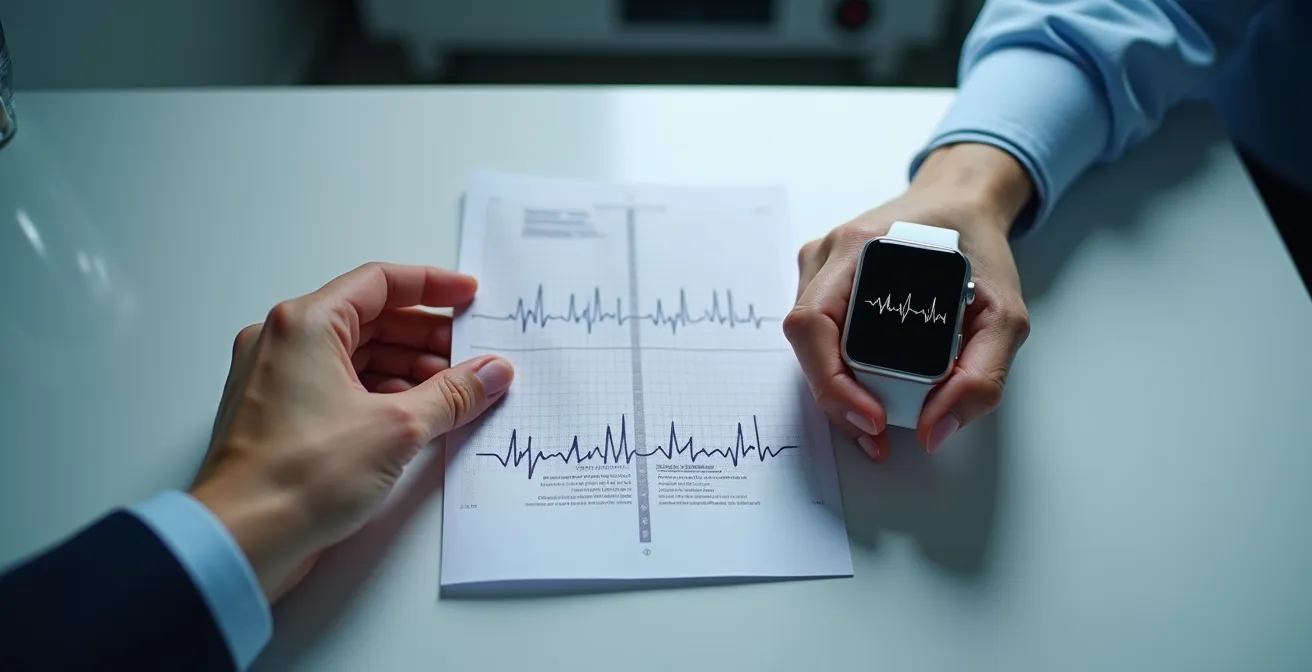
This difference in perspective creates significant diagnostic blind spots for a smartwatch. While excellent for spotting the specific irregular rhythm of AFib, a single-lead ECG simply cannot detect a host of other serious cardiac issues that a 12-lead ECG is designed to find. These include evidence of a previous heart attack, dangerous conduction problems like bundle branch blocks, or inherited conditions such as Brugada syndrome.
The table below clearly illustrates what a smartwatch can and cannot detect, highlighting its role as a focused screening tool rather than a comprehensive diagnostic instrument.
| Condition | 12-Lead Hospital ECG | Single-Lead Smartwatch |
|---|---|---|
| Atrial Fibrillation | ✓ Detectable | ✓ Detectable |
| Previous heart attack signs | ✓ Detectable | ✗ Not detectable |
| Bundle branch blocks | ✓ Detectable | ✗ Not detectable |
| Brugada syndrome | ✓ Detectable | ✗ Not detectable |
| ST elevation (active heart attack) | ✓ Detectable | ✗ Limited detection |
The Mistake of Panicking Over an Unconfirmed Atrial Fibrillation Alert
Receiving an AFib alert can be frightening, but the single most important first step is to remain calm. A common mistake is to panic and rush to A&E based on a single, unconfirmed reading. Smartwatch ECGs are highly sensitive to movement and poor contact, which can create electrical “noise” that the algorithm misinterprets as an arrhythmia. This is the difference between a genuine arrhythmia (an abnormal heart rhythm) and an artefact (a flaw in the data recording).
Your immediate response should be to validate the reading. Sit down, relax, ensure the watch is fitted snugly, and rest your arm on a table to minimise movement. After five minutes, take another ECG reading. If the alert persists but you have no other symptoms (like chest pain, severe dizziness, or shortness of breath), the correct NHS protocol is not to call 999, but to call NHS 111 for guidance or book a routine appointment with your GP. If, however, you experience severe symptoms alongside the alert, you should treat it as a medical emergency and call 999.
While false alarms are possible, the technology can also be genuinely life-saving. It acts as a vital screening tool, especially for paroxysmal AFib, which comes and goes and is often missed during a routine GP visit.
Case Study: A Life-Saving Alert in Scotland
Andrew Thompson from Dunbartonshire experienced this first-hand. His smartwatch alerted him that his heart rate was extremely low. He had no other symptoms that would have prompted him to see a doctor. When he mentioned the alert to his GP, he was referred for further tests and subsequently fitted with a pacemaker. The initial alert, followed by a calm and appropriate medical follow-up, may well have saved his life.
The correct response to an alert is a calm, methodical process: re-test, assess your symptoms, and contact the appropriate NHS service. Most smartwatches allow you to export the ECG reading as a PDF, which you can then email to your GP surgery. This provides them with valuable data to review before your appointment, turning a moment of potential panic into a productive, informed medical consultation.
Signal Problems: Why Wearing the Watch Too Loosely Skews All Data
The most advanced sensor and algorithm in the world are rendered useless by one simple, physical mistake: wearing the watch too loosely. This is the single most common cause of inaccurate health data. As we’ve discussed, optical sensors rely on a consistent, high-quality light signal. A loose fit breaks this fundamental requirement for good signal integrity.
When the watch is not snug against the skin, two problems occur. First, external ambient light can leak into the sensor, contaminating the reading and making it difficult for the algorithm to isolate the faint signal from your blood flow. Second, and more importantly, the watch moves. With every movement of your arm, the device can shift slightly, causing a momentary loss of contact with the skin. This creates gaps in the data or, worse, the motion itself is misinterpreted by the algorithm as a heart rate fluctuation. In some cases, fitness tracking experts confirm that a loose fit during vigorous exercise can lead to a complete loss of heart rate metrics or wildly inaccurate spikes.
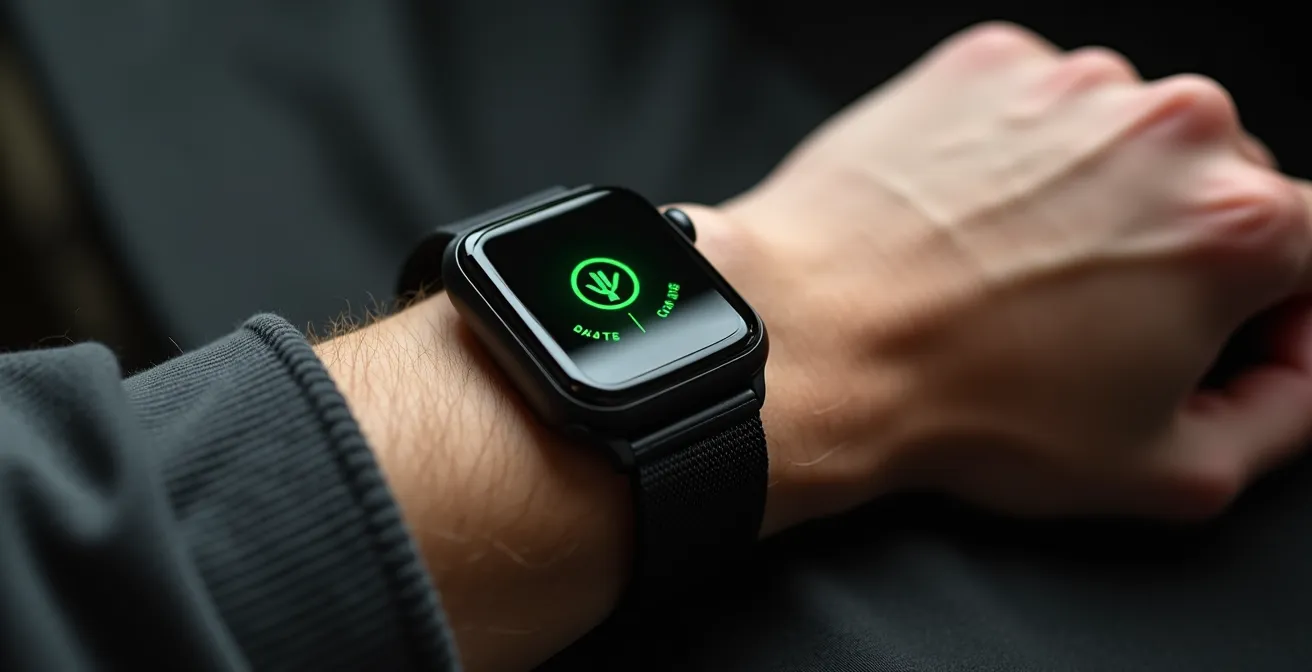
The correct fit is “snug but not constricting.” You should be able to fit one finger between the band and your wrist. The watch should be worn just above the wrist bone, where it can lie flat against your skin. The choice of strap material also plays a role, especially depending on your activity. A metal or leather band that is fine for the office might become too loose during a run as you sweat.
For different activities common in the UK, strap choice can significantly impact data quality. A silicone band is ideal for a Saturday morning Parkrun, while a more comfortable fabric strap might be better for sleep tracking.
| Activity | Best Strap Material | Accuracy Rating | UK Context |
|---|---|---|---|
| Parkrun/Exercise | Silicone Sport Band | ★★★★★ | Essential for Saturday morning runs |
| Office wear | Milanese Loop/Metal | ★★★☆☆ | Stylish but can loosen and affect accuracy |
| Sleep tracking | Nylon/Fabric | ★★★★☆ | Comfortable and secure for overnight wear |
| Daily wear | Leather | ★★★☆☆ | Professional but can degrade with sweat |
Smartwatch or Medical Bracelet: Which to Choose for Monitoring an Arrhythmia?
This question cuts to the core of the regulatory and functional differences between consumer electronics and true medical devices. The answer is unequivocal: a consumer smartwatch is not a substitute for a certified medical monitor prescribed by a cardiologist. The distinction is legally and technically profound, governed in the UK by the Medicines and Healthcare products Regulatory Agency (MHRA).
A certified medical device, such as a Holter monitor or a Zio patch, has undergone rigorous, multi-phase clinical trials to prove its diagnostic accuracy and safety. It is prescribed, fitted, and its data is interpreted by trained healthcare professionals. In contrast, a smartwatch is a consumer wellness product. While some features may be “cleared” for specific functions (like AFib detection), the device as a whole is not “approved” as a medical-grade diagnostic tool. The MHRA is clear on this point.
No mainstream smartwatch is MHRA-certified as a medical device for diagnosis.
– UK Medicines and Healthcare products Regulatory Agency (MHRA) guidance
So, which should you choose? The answer depends on your situation. If you have a diagnosed arrhythmia or are undergoing investigation by a cardiologist, you must use the prescribed medical bracelet or monitor. Its data is the clinical gold standard upon which your treatment will be based. A smartwatch ECG can be a useful *adjunct* to this, allowing you to capture symptomatic events that might occur outside the formal monitoring period, which you can then share with your GP or specialist.
If you are a healthy individual with no diagnosed condition, a smartwatch is an excellent screening tool. It can bring a potential, previously unknown issue like AFib to your attention, prompting the necessary conversation with your GP that leads to a proper clinical investigation. The technology is also being trialled within the NHS itself. A pilot using smart rings with cancer patients in Manchester has shown success in remote monitoring of vital signs, demonstrating the future potential of these devices within a clinical framework. However, for now, the line remains clear: for diagnosis and treatment of a known condition, only an MHRA-certified device will suffice.
Why Does Chronic Stress Accelerate Cellular Aging?
Beyond heart rate, many smartwatches now offer stress monitoring, typically by analysing Heart Rate Variability (HRV). While a useful metric for daily wellness, its long-term implications are profound. Chronic stress, as detected by consistently poor HRV scores, is not just a mental state; it triggers a cascade of physiological responses that literally accelerate the aging process at a cellular level.
The primary mechanism involves the hormone cortisol. In short bursts, cortisol is essential for the “fight or flight” response. However, when stress is chronic—due to a demanding job, a difficult commute, or personal anxieties—the body is flooded with cortisol continuously. This sustained exposure promotes low-grade inflammation throughout the body and increases oxidative stress, a state where unstable molecules called free radicals damage cells, proteins, and DNA.
This damage directly affects our chromosomes. At the end of each chromosome are protective caps called telomeres, which are often compared to the plastic tips on shoelaces. Every time a cell divides, these telomeres get slightly shorter. Oxidative stress and inflammation caused by chronic cortisol exposure speed up this shortening process. Once telomeres become critically short, the cell can no longer divide and either dies or enters a senescent “zombie” state, contributing to aging and age-related diseases. Therefore, a high-stress reading on your watch is more than a reminder to relax; it’s a potential indicator of an accelerated biological clock.
Recognising this link allows you to use your watch’s data as a trigger for proactive, evidence-based interventions. The NHS provides a wealth of resources that can be integrated into a data-driven stress management plan.
Action Plan: NHS-Recommended Stress Management Triggered by Smartwatch Data
- Immediate Response: When a stress alert appears on your watch, immediately use the built-in “Breathe” or “Mindfulness” app, or practice NHS-recommended deep breathing exercises for 2-5 minutes.
- Physical Intervention: If stress scores are consistently high, use it as motivation to start the free NHS Couch to 5K app. Regular cardiovascular exercise is one of the most effective ways to combat chronic stress.
- Pattern Recognition: Use your watch’s app to track stress patterns. Note if they correlate with specific UK triggers like the morning commute on a packed train or long working hours, and plan mitigating strategies.
- Improve Sleep Hygiene: If stress is negatively impacting your sleep score, implement the NHS’s official sleep hygiene guidelines, such as creating a regular sleep schedule and avoiding screens before bed.
- Seek Professional Advice: If your smartwatch indicates consistently high stress levels for over two weeks despite your best efforts, book a GP appointment to discuss it. It could be a sign of an underlying issue that needs professional support.
Key Takeaways
- Your smartwatch is a powerful screening tool, but it is not a substitute for a clinical diagnostic tool used by the NHS.
- Real-world accuracy depends heavily on physical factors you control: a snug fit, clean sensors, and awareness of limitations like tattoos or skin tone.
- Data is most valuable when used to inform a conversation with your GP, not for self-diagnosis or panic. Active calibration and context are everything.
Using Biometric Assistants to Monitor Stress Levels on the Tube Commute
The daily commute, particularly on the London Underground, is a perfect real-world laboratory for stress. A packed, delayed Central Line train is a common UK stressor that shows up clearly in biometric data. By using your smartwatch as a “biometric assistant,” you can move from passively experiencing this stress to actively monitoring, understanding, and managing it.
The key is to combine data with context. When you feel a spike in stress on your journey, don’t just note the feeling; geotag it. Make a mental or physical note of where you were—perhaps the crush at Bank station or the tunnel between London Bridge and Waterloo. Over time, you can build a personal stress map of your commute. This allows you to make data-informed decisions, such as trying a different route (like the calmer Elizabeth Line, if possible) or getting off one stop early to walk the final 10 minutes and decompress.
When an alert triggers on the train, it becomes an actionable prompt. Instead of scrolling through news headlines, launch a two-minute breathing exercise. Switch from a stressful podcast to a calming music playlist. These small, immediate interventions can blunt the physiological impact of the stressful environment. The major wearable ecosystems—Apple, Fitbit, and Garmin—each offer tools for this. Apple’s ‘Mindfulness’ app is simple and effective offline on the Tube. Fitbit’s EDA Scan provides detailed post-commute analysis, while Garmin’s ‘Body Battery’ gives an excellent all-day view of how the commute depletes your energy reserves.
Ultimately, the role of a smartwatch is not to replace the expert guidance of the NHS but to empower you as a patient. By understanding the technology’s limitations and learning to interpret its data critically, you can turn your device into a valuable partner for your health. Use it to build healthier habits, spot concerning trends, and, most importantly, have more productive and data-rich conversations with your GP.