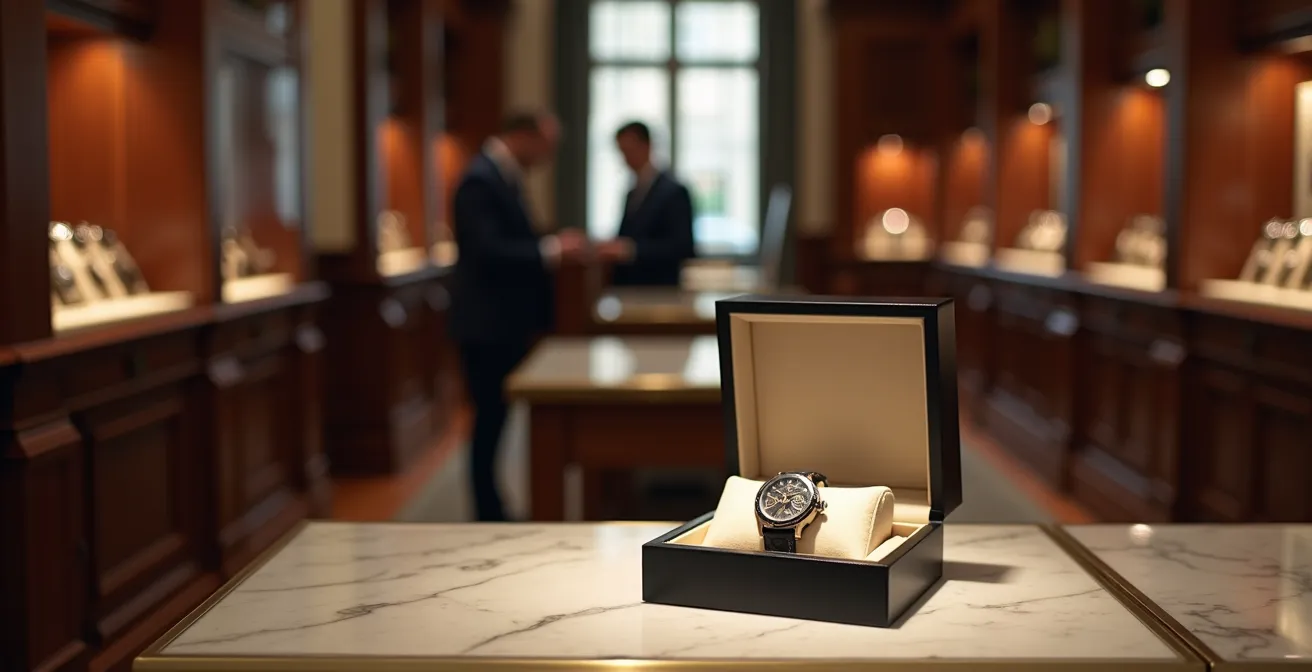
For the true UK collector, the conversation has moved beyond the usual Rolex, Patek, and AP. Real distinction now lies in appreciating the brands that demonstrate technical legitimacy and quiet confidence.
- Technical mastery, like the finishing of A. Lange & Söhne or the innovation of Grand Seiko, is the new benchmark for respect among purists.
- A brand’s strategic presence in the UK, from a Bond Street flagship to a robust post-Brexit service network, reveals its long-term commitment and value.
Recommendation: Shift your focus from chasing hype to building genuine relationships with authorised dealers who value horological knowledge over mere demand.
For any enthusiast walking through the Burlington Arcade or past the windows of Bond Street, the landscape of luxury watches can feel overwhelmingly uniform. The same steel sports models, the same celebrated chronographs, the same trio of powerhouse brands—Rolex, Patek Philippe, and Audemars Piguet—dominate both the displays and the discussions. It’s a world of hype, waiting lists, and a nagging sense of déjà vu. Many collectors, weary of this predictable narrative, start looking for alternatives in well-respected but still mainstream houses like Omega or Cartier, which is a logical first step.
But what if the real secret to building a distinguished collection lies one layer deeper? The most seasoned collectors in the UK are playing a different game entirely. They are moving past the noise and focusing on a different set of criteria: irrefutable technical prowess, nuanced brand history, and the subtle signals of ‘quiet luxury’ that only fellow connoisseurs can decipher. This is not about finding a cheaper alternative; it’s about finding a more interesting one. It’s about appreciating the art of watchmaking in its purest form, away from the influence of auction results and social media trends.
This guide is your confidential briefing on that world. We will move beyond the obvious choices to explore the truly renowned houses that offer a more profound and personal collecting journey. We will analyse why brands like A. Lange & Söhne are considered technical equals to the holy trinity, how to navigate the complex ecosystem of London’s authorised dealers, and what to consider before investing in a piece of horological art that tells a story, not just the time. This is your roadmap to a collection that is not just valuable, but truly unique.
text
This article provides an insider’s perspective on building a distinctive watch collection in the UK. Explore our table of contents to navigate through the key strategies and brands that define the modern connoisseur.
Summary: Navigating the World of Elite Watch Collecting Beyond the Mainstream
- Pourquoi A. Lange & Söhne rivalise techniquement avec Patek Philippe ?
- Comment Grand Seiko a conquis le respect des puristes européens ?
- Vacheron Constantin ou Breguet : quelle est la vraie montre des rois ?
- L’erreur de sous-estimer Jaeger-LeCoultre, “l’horloger des horlogers”
- Problème de marque oubliée : faut-il acheter une marque historique récemment relancée ?
- Micro-tendance TikTok ou évolution de fond : sur quoi investir cette saison ?
- Pourquoi un calibre manufacture coûte-t-il 3 fois plus cher à l’entretien ?
- How to Build a Relationship with Bond Street Authorised Dealers?
Pourquoi A. Lange & Söhne rivalise techniquement avec Patek Philippe ?
In the hushed circles of high horology, comparing any brand to Patek Philippe is often seen as heresy. Yet, when the name A. Lange & Söhne is mentioned, the tone shifts from dismissal to serious debate. The reason is simple: technical legitimacy. While Patek Philippe represents the pinnacle of Swiss tradition, Lange embodies the apex of German precision and artistry. For UK collectors seeking substance over branding, the appeal of Lange is its uncompromising approach to movement construction and finishing, which is visibly on par with, and in some aspects surpasses, its Geneva-based rival.
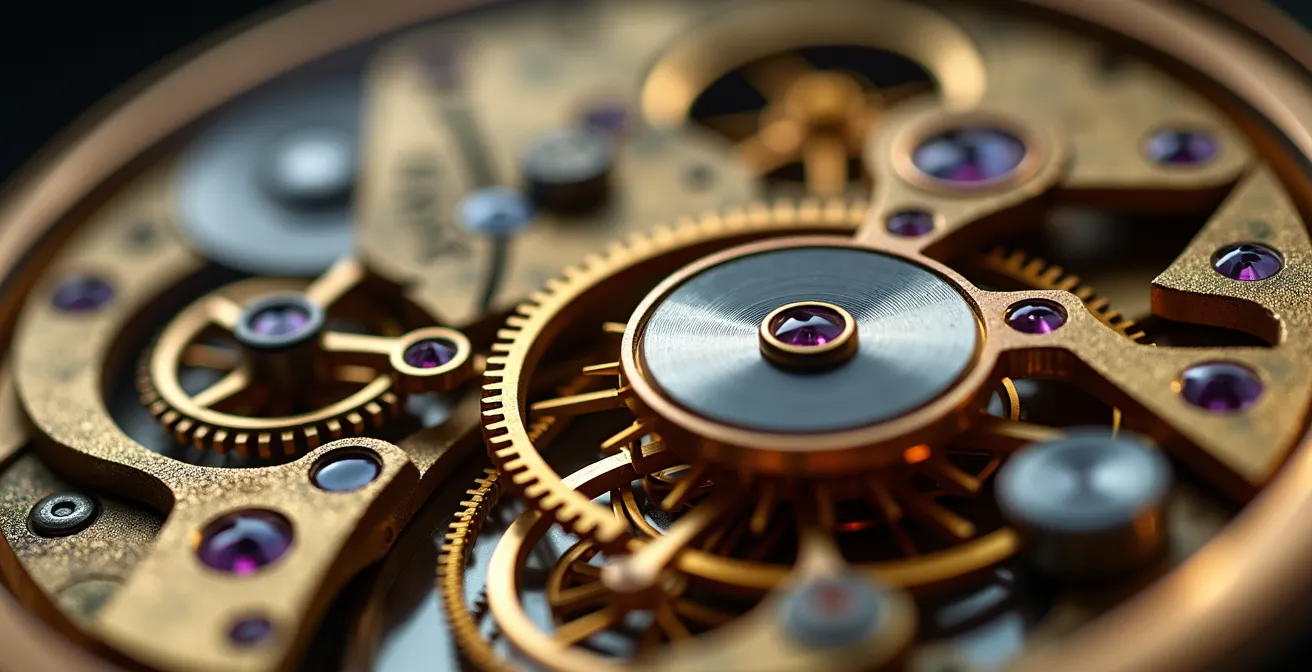
Every Lange movement is assembled twice. After the first assembly and testing, it is completely disassembled, its components are meticulously finished and decorated, and then it is re-assembled for good. This dedication to perfection is evident in the iconic three-quarter plates made of German silver, the hand-engraved balance cocks, and the screw-down gold chatons—hallmarks of a watchmaking philosophy that prioritises craft above all else. This isn’t just about telling time; it’s about creating a mechanical sculpture.
The brand’s confidence is palpable in its UK strategy. The recent opening of its four-storey flagship boutique on London’s Old Bond Street is a bold statement. This isn’t a minor outpost; it’s a major embassy of German watchmaking, placing it shoulder-to-shoulder with the most established Swiss houses. By securing such a prestigious location, A. Lange & Söhne is not just selling watches; it’s asserting its position as a true equal in the top tier of horology, a fact that astute UK collectors have been quick to recognise.
Comment Grand Seiko a conquis le respect des puristes européens ?
For decades, the term ‘luxury watch’ was synonymous with ‘Swiss made’. The idea that a Japanese brand could compete at the highest level was, for many European purists, unthinkable. Grand Seiko shattered that perception not with marketing, but with undeniable product excellence. The brand won over the most sceptical collectors by focusing on two key areas where it is a world leader: meticulous finishing and revolutionary movement technology.
The first point of conversion for many purists is witnessing ‘Zaratsu’ polishing firsthand. This ancient sword-polishing technique, applied to Grand Seiko’s cases and hands, creates perfectly smooth, distortion-free surfaces that play with light in a way few others can match. This is complemented by dials that are works of art, inspired by Japanese nature—from the ‘Snowflake’ dial mimicking freshly fallen snow to the ‘White Birch’ evoking the forests near their studios. This aesthetic sensibility offers a refreshing alternative to traditional European design codes.
Technologically, the Spring Drive movement is Grand Seiko’s masterstroke. It combines the traditional mainspring of a mechanical watch with an electronic regulator, resulting in a perfectly smooth, gliding seconds hand and accuracy that mechanical-only movements cannot achieve. This hybrid innovation, initially viewed with suspicion, is now respected as a unique and brilliant piece of engineering. This growing appreciation isn’t just anecdotal; a recent Chrono24 report reveals a staggering +15.54% value increase for its Heritage Collection in Q1 2024, proving that European market respect is translating into serious collector demand.
Vacheron Constantin ou Breguet : quelle est la vraie montre des rois ?
While Patek Philippe may be the modern king of auction results, the historical claim to the title ‘watch of kings’ is fiercely contested by two other giants: Vacheron Constantin and Breguet. Both boast an uninterrupted history stretching back to the 18th century and a client list that reads like a who’s who of European royalty, including Marie Antoinette for Breguet and various tsars and kings for Vacheron Constantin. For a collector fascinated by provenance and heritage, choosing between them is a delightful dilemma.
The case for Breguet rests on its founder, Abraham-Louis Breguet, arguably the single most important watchmaker who ever lived. He invented the tourbillon, the pare-chute shock protection system, and the iconic Breguet hands and numerals. To own a Breguet is to own a piece of direct horological lineage from the master himself. The brand’s aesthetic is defined by its engine-turned ‘guilloché’ dials and classic elegance.
Vacheron Constantin, on the other hand, represents the pinnacle of Geneva’s ‘Haute Horlogerie’ tradition. As the world’s oldest continuously operating watch manufacturer, its legacy is one of bespoke creations for the elite and an mastery of artistic crafts. Their modern offerings, from the sporty Overseas to the classic Patrimony, are all certified with the prestigious Geneva Seal, a guarantee of the highest quality in movement finishing and construction. Vacheron is also making aggressive moves in the UK, establishing a worldwide Certified Pre-Owned programme with Watchfinder & Co. This strategic initiative, mirroring Rolex’s own CPO launch, demonstrates a commitment to managing its legacy and value in the crucial UK secondary market, ensuring its royal heritage continues to command a premium.
Ultimately, the choice comes down to philosophy. Breguet is the choice for the purist obsessed with the genius of a single inventor, while Vacheron Constantin appeals to the connoisseur who values the unbroken tradition and artistic excellence of Geneva’s finest artisans. Both offer a royal pedigree far deeper than many of their more hyped counterparts.
L’erreur de sous-estimer Jaeger-LeCoultre, “l’horloger des horlogers”
Jaeger-LeCoultre (JLC) holds a unique and somewhat paradoxical position in the watch world. It is profoundly respected by insiders yet often overlooked by mainstream buyers chasing flashier names. This is precisely why savvy UK collectors are paying close attention. The brand’s nickname, “the watchmaker’s watchmaker,” isn’t a marketing slogan; it’s a statement of fact. For much of the 20th century, JLC produced movements for almost every other top-tier brand, including Patek Philippe, Audemars Piguet, and Vacheron Constantin. They possess a level of technical creativity and manufacturing prowess that is virtually unmatched.
The iconic Reverso is a perfect example. Born on the polo fields of the 1930s, its clever swivelling case is a masterclass in form following function. Yet, to see it merely as a watch with a gimmick is to miss the point. The Reverso has become a canvas for JLC’s horological artistry, housing everything from simple time-only movements to breathtakingly complex perpetual calendars and minute repeaters. The market is finally waking up to its enduring value; market analysis shows a remarkable +17.57% appreciation for the Reverso Grande Taille in Q1 2024. This is supported by wider positive trends, with Chrono24’s index also showing a healthy +3.97% gain for the brand overall in the same period.
For UK owners, the practicalities are also well-managed. While a manufacture calibre requires specialist care, JLC provides a clear network for it. Key considerations include:
- Authorised Service Centres: JLC has a strong UK presence with boutiques on London’s Old Bond Street and in Harrods, providing direct points of contact.
- Warranty: A comprehensive 24-month guarantee is provided on all maintenance and repair work, offering peace of mind.
- Turnaround Times: While service can take 12-15 weeks including shipping, this is standard for high-end manufacture movements sent back to Switzerland.
Underestimating JLC is a rookie mistake. For those in the know, it offers access to top-tier watchmaking with a subtlety and intellectual appeal that the “big three” often lack.
Problème de marque oubliée : faut-il acheter une marque historique récemment relancée ?
One of the most tempting propositions for a discerning collector is the ‘revived brand’—a historic name from watchmaking’s golden era, brought back to life by new investment. Brands like Czapek & Cie or Fears in the UK offer a compelling narrative and a chance to get in on the ground floor. However, this path is fraught with risk and requires a cool-headed assessment that separates romantic storytelling from sound investment. The fundamental question is one of long-term viability versus historical charm.
While the allure of owning a piece from a revived heritage brand is strong, the practical realities for a UK-based collector must be considered. Issues like post-Brexit import duties for EU-based brands and, most critically, the service network, can turn a dream purchase into a logistical nightmare. Unlike established players, a revived brand may have a single point of service, or none at all in the UK, making routine maintenance a costly and time-consuming affair. The following table breaks down the key differences in market resilience:
| Factor | Established Brands (Rolex, Omega) | Revived Heritage Brands |
|---|---|---|
| UK Service Network | Multiple authorised centres | Limited or non-existent |
| Secondary Market Liquidity | High demand, easy resale | Niche market, slower turnover |
| Post-Brexit Import Duties | Established channels | Potential complications for EU brands |
| Value Retention | Proven track record | Uncertain, dependent on brand revival success |
The timing of such a purchase is also critical. In a fluctuating market, taking a risk on an unproven entity is a bold move. However, some analysts believe the market may be ripe for such calculated risks. As Balazs Ferenczi, Head of Brand Engagement at Chrono24, noted:
We may have now reached the lowest point, given the near stagnation of prices in Q1 2024, as seen in our ChronoPulse watch index.
– Balazs Ferenczi, Head of Brand Engagement at Chrono24
This suggests that for a collector with a high-risk appetite and a genuine belief in a revived brand’s new direction, the moment of maximum opportunity could be now. The key is to buy with your eyes open, fully aware that you are investing in a future story, not a proven past.
Micro-tendance TikTok ou évolution de fond : sur quoi investir cette saison ?
The modern collector is bombarded with trends from all angles. One week, TikTok declares a vintage digital watch the height of retro-chic; the next, a prominent magazine proclaims the return of solid gold. Distinguishing between a fleeting micro-trend and a genuine, long-term evolution in taste is perhaps the most critical skill for building a collection with lasting value. The key is to look for shifts driven by fundamental design principles and demographic changes, rather than social media algorithms.
A true evolution often manifests as a slow, steady return to classicism. For instance, the recent move away from oversized, 44mm+ cases towards more modest and traditional sizes (36mm-39mm) is not a fad. It’s an evolution driven by a renewed appreciation for comfort, wearability, and vintage aesthetics. Similarly, the growing interest in unique dial materials—like meteorite, aventurine glass, or hardstones—is a fundamental shift towards artistry and individuality, a desire for a watch that feels unique. These are evolutions to invest in.
In contrast, a micro-trend is often driven by a specific celebrity endorsement or a viral moment. The sudden craze for watches with a specific colour dial (like ‘Tiffany blue’) is a classic example. While fun, these trends have a short lifespan, and values can fall as quickly as they rise once the hype moves on. The smart collector can enjoy these trends, but they should not form the core of an investment strategy. The UK watch market is robust, with analysis forecasting growth from USD 3,046.61 million in 2024 to USD 4,554.92 million by 2033, but this growth will favour pieces with enduring, intrinsic quality, not fleeting popularity.
Pourquoi un calibre manufacture coûte-t-il 3 fois plus cher à l’entretien ?
For many aspiring collectors, acquiring a watch with an in-house, or ‘manufacture’, calibre is a major goal. It signifies a brand’s technical independence and is a hallmark of true high-end watchmaking. However, the prestige of ownership comes with a hidden cost that many discover too late: servicing. The price to service a manufacture movement can easily be three to five times higher than that of a standard, third-party movement (like those from ETA or Sellita), and the reasons are rooted in exclusivity, complexity, and a strained UK service infrastructure.
A standard ETA movement is like the engine of a widely produced car; parts are readily available, and thousands of independent watchmakers across the UK are trained to work on them. A manufacture calibre, however, is a proprietary engine. The brand holds a monopoly on the parts, tools, and training required for its maintenance. This exclusivity naturally drives up the price. Furthermore, these movements are often more complex, with unique constructions or delicate complications that require a higher level of skill and more time to service properly. The following table illustrates the stark difference in logistics for a UK owner:
| Watch Type | Movement | Service Timeline | UK Service Options |
|---|---|---|---|
| A. Lange & Söhne | Manufacture | 12-15 weeks + shipping | Must ship to Glashütte |
| Older Tudor Black Bay | ETA-based | 4-6 weeks | Multiple UK independents |
| Modern Omega | Co-Axial Manufacture | 8-10 weeks | UK service centre available |
Case Study: The UK Independent Watchmaker Shortage Impact
The problem is exacerbated by a structural issue within the UK market. There is a declining number of skilled independent watchmakers with the expertise to handle high-end calibres. This creates a service bottleneck, forcing owners of manufacture movements into the brand’s official, and more expensive, service network. For brands without a UK-based service centre, this means shipping the watch internationally to Switzerland or Germany, a process now complicated by post-Brexit customs paperwork, insurance costs, and extended timelines. While an ETA-based watch can be serviced locally in weeks, a manufacture calibre owner is often locked into a months-long, four-figure-cost process, a crucial factor to consider before purchase.
This higher cost is not a sign of being ripped off; it is the inherent price of the exclusivity and craftsmanship that made the watch desirable in the first place. For the serious collector, it’s a non-negotiable part of the long-term cost of ownership.
Key Takeaways
- True collector status is achieved not by owning the most hyped watch, but the one that demonstrates deeper knowledge of technical craft and brand strategy.
- The UK market, with its concentration of flagship boutiques in London and post-Brexit service complexities, has its own unique rules of engagement.
- Focus on brands with proven technical legitimacy and a clear, long-term commitment to the UK, as evidenced by their retail and service infrastructure.
How to Build a Relationship with Bond Street Authorised Dealers?
In the world of scarce luxury watches, money alone is not enough. The most sought-after pieces are not sold; they are ‘allocated’ by store managers at Authorised Dealers (ADs) to their most valued clients. For a new collector, breaking into this inner circle can seem impossible. However, it’s not about being the biggest spender; it’s about being the smartest and most genuine customer. Building a relationship with an AD on Bond Street or in another prestigious London location is a long-term strategic game built on passion, patience, and respect for their business.
ADs are inundated with “investors” and “flippers” who only want the hottest steel sports model. To stand out, you must demonstrate a genuine passion for the brand’s entire collection, not just one model. Discuss the brand’s history, reference a specific complication you admire, or talk about a less popular model that you genuinely appreciate. This signals that you are a true enthusiast, the kind of long-term client they want to cultivate. It’s also important to recognise that ADs are looking to build a new generation of collectors. Your age is less important than your passion and purchasing power, with some reports showing younger buyers have significant capital to deploy.
Navigating the retail environment requires a clear strategy. Walking in on a busy Saturday to ask for a watch with a five-year waiting list will get you nowhere. You need a more methodical approach to show you are serious and respectful of their time and process.
Your Action Plan: The Strategic Approach to London’s Watch Retail Hierarchy
- Map the Ecosystem: Understand the difference. A high-volume flagship like Watches of Switzerland on Regent Street operates differently from an intimate, mono-brand boutique on Bond Street. Start where you feel you can build a connection.
- Demonstrate Genuine Passion: Don’t just talk about hype models. Reference articles from UK-based publications, discuss the brand’s heritage, or express interest in their more classical or complicated pieces to show your depth of knowledge.
- Navigate the Hierarchy: Your initial goal is to build a rapport with a specific Client Advisor. They are your gateway. Over time, as you make purchases, you may get introduced to the Store Manager, who typically controls the allocation of the most desirable pieces.
- Schedule Appointments: For any serious inquiry or purchase, book an appointment. It shows you are organised, serious, and respect their time, immediately elevating you above the casual walk-in traffic.
- Register Your Interest Formally: After a good conversation, always ask to have your interest in specific models formally registered in their system. This is the first official step onto the waitlist and a crucial part of the process.
This process requires patience. It may involve purchasing a less sought-after model or a piece of jewellery to establish a purchase history. But by playing the long game and proving you are a genuine connoisseur, you transform from just another customer into a valued client, opening the door to the watches that others can only dream of.
Now that you understand the brands to target and the trends to follow, the next logical step is to put this knowledge into practice. Begin building these crucial relationships and start your journey towards a collection that is a true reflection of your connoisseurship.