
Securing a top-tier watch from a Bond Street AD isn’t about luck or patience; it’s about proving you are a strategic asset to their business.
- Empty “Exhibition Only” windows are a filtering mechanism designed to identify serious, long-term clients, not a genuine stock issue.
- Your purchase history must be treated as a curated ‘investment portfolio’ that signals your value and commitment beyond hyped models.
Recommendation: Shift your mindset from a hopeful customer to a strategic partner. Your goal is to build a diverse purchase portfolio that demonstrates long-term value, which is the only real key to unlocking the access you seek.
You walk down Old Bond Street, the heart of London’s luxury scene. In the window of a storied Authorised Dealer (AD), you see it: the perfect stainless steel sports watch you’ve been dreaming of. You step inside, heart pounding, only to be met with a polite smile and the familiar, soul-crushing phrase: “That piece is for exhibition only. We can add you to the expression of interest list.” You know this list is a black hole, a polite fiction for a game being played by a different set of rules. This experience is the shared frustration of nearly every modern watch enthusiast. The common advice—be patient, be polite, visit often—feels hollow, a set of platitudes for a game you’re not even invited to play.
The truth is, these are distractions. The conventional wisdom misses the fundamental point. The challenge isn’t a lack of supply; it’s a lack of proven value on your part. The ADs aren’t looking for another customer; they are cultivating a portfolio of clients who are assets to their business. They are filtering for individuals who understand the unspoken rules of this exclusive ecosystem, who demonstrate loyalty and, most importantly, whose spending patterns benefit the boutique’s broader business goals, which often include high-margin jewellery or less-hyped timepieces.
But what if you could learn the rules of this unspoken game? What if the key wasn’t about waiting, but about acting strategically? This guide rejects the generic advice and instead provides an insider’s playbook. We will reframe your approach entirely. You will stop thinking like a customer and start thinking like a strategic partner. It’s not about how to get on a list; it’s about how to make yourself so valuable to the AD that they want to offer you the watch. This article will deconstruct the process, from building a powerful purchase portfolio to mastering the subtle social cues that separate the insiders from the outsiders.
This comprehensive guide will walk you through the essential strategies for navigating the exclusive world of London’s high horology. Each section is designed to give you a clear, actionable understanding of the game and how to play it effectively.
Summary: Your Strategic Guide to Bond Street Watch Collecting
- Why Are the Showcases Empty Despite Continuous Production?
- How to Structure Your Purchase History to Unlock “Allocation Only” Models?
- Official Boutique or Specialised Reseller: Where to Buy Without Risk of Blacklisting?
- The 3 Behaviours That Guarantee You an Immediate Refusal of Sale
- When to Express Your Interest in Watches & Wonders Novelties?
- How to Distinguish a True Manufacturer from a Simple Reseller in Hatton Garden?
- Why Is Wearing a Watch Traditionally Discouraged with a Tuxedo?
- Beyond the Big Three: Underrated Renowned Houses for UK Collectors
Why Are the Showcases Empty Despite Continuous Production?
The “Exhibition Only” signs on Bond Street are not a sign of failure but a masterclass in client filtering. In the world of high horology, scarcity is a managed resource. For an AD, an empty display case is more valuable than one full of watches sold to the wrong people. These display pieces serve as a powerful gatekeeping tool, allowing sales associates (SAs) to gauge the intent and knowledge of a prospective client. A walk-in demanding the “hot” steel model is immediately flagged as a potential flipper—a low-value, transactional customer. A true enthusiast, however, understands the display is a conversation starter, an opportunity to demonstrate passion and long-term interest.
This controlled scarcity has given rise to a thriving, legitimate secondary market. As an example, the success of Kettle Kids, who secured a 20-year lease on Old Bond Street, demonstrates this dynamic perfectly. They became the first luxury reseller to establish a flagship among traditional ADs, building their business entirely on sourcing the very pieces that are “unavailable” in boutiques. By understanding that allocation scarcity was a permanent feature of the market, they built a global network to supply the demand that ADs deliberately leave unmet. For the aspiring collector, the lesson is clear: the empty window is a test. Your reaction to it tells the SA everything they need to know about whether you’re a player in the long game or just a tourist.
This dynamic is further influenced by post-Brexit realities, where new import duties and allocation systems affect stock distribution to the UK. An informed collector acknowledges these complexities rather than complaining about them. The goal is not to find a watch available for a walk-in purchase; it’s to build a relationship with an SA who can eventually decode when an exhibition piece becomes an allocated piece for an established, valued client. The empty showcase is the first move in a long, strategic chess match.
How to Structure Your Purchase History to Unlock “Allocation Only” Models?
Your purchase history is the single most important tool in your arsenal. It is not a random collection of receipts but your “Purchase Portfolio”—a curated testament to your value as a client. An AD is a business with targets across multiple product categories, including high-margin jewellery and less-hyped watch brands. A client who only wants the “hot” stainless steel models is a net negative for a sales associate’s personal targets. The client who helps them move a high-margin diamond necklace or a beautiful but slower-selling dress watch becomes a strategic asset. This is the core of the unspoken game: you must prove your value to the business as a whole, not just your desire for one specific watch.
Building this portfolio requires a strategic approach, balancing investment, time, and brand diversity. It’s about sending the right allocation signals to demonstrate you are a long-term partner, not a short-term speculator. This is a multi-faceted strategy that can be tailored to your resources and goals.
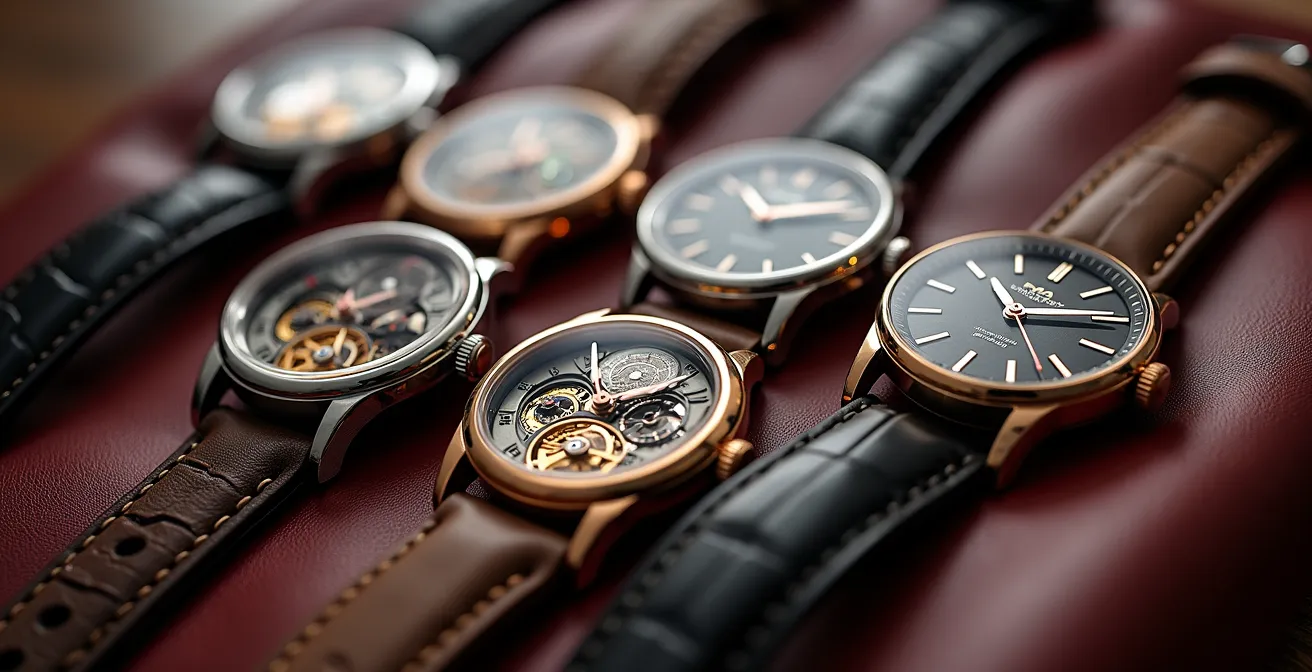
As you can see, a collection is built over time, piece by piece. The following strategies, detailed in a recent analysis of dealer relationship tactics, outline the most effective paths for London-based collectors.
| Strategy | Investment Level | Timeline | Success Rate |
|---|---|---|---|
| WoS Group Portfolio Buying | £20,000-50,000 across brands | 12-24 months | High for Tudor/Omega allocation |
| Independent AD Loyalty | £10,000-30,000 niche brands | 6-18 months | Moderate for specific models |
| Jewellery Purchase Strategy | £5,000-15,000 high-margin items | 3-12 months | Fast track for relationship building |
| Pre-Owned Department Leverage | £15,000+ certified pieces | Immediate credit | Highest for demonstrating commitment |
Each of these paths communicates something different. The Jewellery Purchase Strategy is the fastest way to become a priority client because it directly contributes to the boutique’s most profitable sector. Leveraging the pre-owned department also sends a powerful signal of commitment, showing you are invested in the store’s entire ecosystem. The ultimate goal is to build a balanced portfolio that makes you an indispensable partner to the sales associate and the boutique.
Official Boutique or Specialised Reseller: Where to Buy Without Risk of Blacklisting?
Navigating the London watch market requires understanding the distinct roles of official boutiques (ADs) and specialised resellers. The two are not enemies; they are two sides of the same coin, catering to different needs. For a new, “hot” model, the only legitimate path is through an Authorised Dealer. Attempting to source a new, allocated piece from anywhere else, especially from resellers in areas like Hatton Garden, is a red flag. ADs monitor the grey market, and if a watch they allocated appears for sale with papers dated recently, the original buyer will be blacklisted permanently. This is the cardinal sin of watch collecting.
However, the pre-owned market offers a safe and intelligent way to build a collection, provided you go to the right places. Reputable vintage and pre-owned dealers are an integral part of the ecosystem. A prime example is The Watch Club, which has operated successfully from the prestigious Royal Arcade on Old Bond Street for over two decades. They coexist with the major brand boutiques by focusing on unmodified vintage and pre-owned pieces with full provenance and warranties. Their success demonstrates that a certified secondary dealer is a respected institution, not a back-alley operation. Buying from them carries zero risk of blacklisting and can be a fantastic way to acquire discontinued models or investment-grade vintage pieces.
The key is to know your zones and the purpose of each. Mayfair and Bond Street are for building relationships with ADs for new pieces. Arcades like Burlington and Royal are home to established, high-end vintage dealers. Resellers owned by the brands’ parent companies, like Watchfinder & Co. (owned by Richemont), also offer a secure environment. The most dangerous territory is listing a recently acquired allocated piece on a public platform like eBay or Chrono24 with a UK location—this is the fastest way to end your collecting journey before it even begins.
The 3 Behaviours That Guarantee You an Immediate Refusal of Sale
In the subtle theatre of a Bond Street boutique, what you don’t say is often more important than what you do. Sales associates are highly trained to spot a “flipper” or a transactional client from a mile away. Certain behaviours, while seemingly innocent, are immediate red flags that will get you mentally blacklisted, even if the SA remains perfectly polite. Mastering the etiquette of the boutique is non-negotiable for anyone serious about building a long-term relationship.
The first cardinal sin is to only ask about the unobtainable steel sports models. Walking in and immediately asking for a “Pepsi,” a “Panda,” or a “Nautilus” is the amateur’s move. It signals you have done no research and are only interested in the hype. It tells the SA you are not a true enthusiast of the brand, but a speculator chasing a profit. A genuine collector expresses interest in the brand’s broader collection, its history, and its less-hyped but equally impressive complications.

The second critical error is to mention grey market prices or online listings. Saying “I can get this for £X online” or “Why is this model selling for double on the grey market?” is a catastrophic mistake. It shows disrespect to the AD’s official pricing and immediately frames you as a person who sees the watch as a commodity to be arbitraged. The boutique is a temple of luxury, not a trading floor. Your conversation should be about craftsmanship, heritage, and personal connection to the piece, never about its resale value.
Finally, a cluster of related behaviours will instantly mark you as an outsider. These include asking about VAT refunds (the UK’s tourist scheme was scrapped, so this signals you are not a resident collector), name-dropping without a genuine introduction (the London watch community is small and verifies everything), and photographing display watches without permission (often seen as dealer reconnaissance). Avoiding these behaviours is the first step in demonstrating you understand and respect the unspoken rules of the game.
When to Express Your Interest in Watches & Wonders Novelties?
The horological calendar has fundamentally changed, and the strategic collector must adapt. The era of Baselworld as the single, massive industry event is over. Today, Geneva’s Watches & Wonders is the main event, but the strategy for engaging with new releases has become far more localised and relationship-driven, especially in a key market like London. Simply waiting for the show’s announcements and then calling your AD is reactive and ineffective. The game is won in the weeks before and after the event through carefully timed communication.
The engagement timeline is a delicate dance. In the month *before* Watches & Wonders (typically February/March), you should contact your primary SA. This is not to demand an allocation, but to express genuine excitement for the brand’s upcoming year. Mention you are eagerly following the news and look forward to seeing what they unveil. This proactive, low-pressure contact registers your interest at the highest level. During the show itself, follow the brand’s releases on social media, but resist the urge to bombard your SA with messages. They are inundated. A simple, “Wow, the new [Model Name] looks incredible!” is enough.
The most crucial step happens in the weeks *after* the show. This is when you schedule an in-person visit to the boutique. Your goal is to discuss the specific models that caught your eye with your SA. This is where your prior relationship and purchase portfolio come into play. Furthermore, brands now lean heavily on local, exclusive events. Audemars Piguet’s AP House on New Bond Street is a prime example of this shift towards a hospitality-retail hybrid. Being on the list for these private London events—be it a preview at the Saatchi Gallery or a brand-sponsored polo match—is now more important than a trip to Geneva. These events are where allocations are often decided.
Your Action Plan: Strategic UK Event Engagement
- Pre-Show (February): Contact your SA to express general excitement for upcoming brand releases, reinforcing your engagement without making demands.
- Show Week (March/April): Follow the novelties via brand channels. Send a single, brief message to your SA about a piece that genuinely excites you to show you’re paying attention.
- Post-Show (April/May): Schedule a boutique visit to discuss specific new models in person, leveraging your existing relationship.
- Summer Events: Actively seek and attend London-based brand events (e.g., gallery launches, sporting events) as these are key networking and allocation opportunities.
- Year-Round Engagement: Participate in all offered boutique evening events and client gatherings to continuously solidify your status as a valued member of the brand’s community.
How to Distinguish a True Manufacturer from a Simple Reseller in Hatton Garden?
While Bond Street is the epicentre for new watches from ADs, Hatton Garden is London’s historic jewellery and watch trade district. For a private buyer, it can be an intimidating and confusing landscape. As James Buttery, a respected watch journalist, noted in a guide to London’s watch scene for Hodinkee, “Hatton Garden is probably where people’s minds go initially but it’s very trade-y and can be quite intimidating as a private buyer.” It’s a world of tiny booths, aggressive sales tactics, and a mix of true artisans and simple traders. For the discerning collector seeking servicing, restoration, or a unique vintage piece, distinguishing a true craftsman from a mere reseller is a crucial skill.
The difference is often immediately apparent in the physical setup and the focus of the conversation. A true watchmaker or manufacturer will have an on-site workshop visible, filled with tools, lathes, and cleaning machines. Their conversation will gravitate towards the technical: movement complications, the challenges of a restoration, or the history of a specific calibre. They sell expertise and craft. A simple reseller, by contrast, operates from a small booth filled with display cases. Their focus is purely transactional, centred on price, investment potential, and market trends. They are selling a product, not a service or a passion.
The table below breaks down the key characteristics to look for. Paying attention to these signals will help you identify the genuine experts who can be valuable long-term partners for servicing and sourcing unique pieces, and avoid the traders who are simply looking for a quick sale.
| Characteristic | True Manufacturer/Craftsman | Simple Reseller |
|---|---|---|
| Physical Setup | Visible on-site workshop with tools | Small booth with display cases only |
| Accreditations | BHI or British Watch & Clock Makers’ Guild member | Basic business registration only |
| Discussion Focus | Movement complications, servicing, restoration | Price, investment potential, market trends |
| Service Offering | In-house repairs and restoration | Outsources all technical work |
| Client Experience | Technical education, craft appreciation | Transaction-focused, quick turnover |
Look for accreditations from bodies like the British Horological Institute (BHI) and ask where servicing is performed. If the answer is “off-site,” you are likely talking to a reseller. A true craftsman takes pride in their in-house capabilities.
Why Is Wearing a Watch Traditionally Discouraged with a Tuxedo?
Understanding the subtle codes of formal wear is another hallmark of a sophisticated collector. The traditional black tie rule is simple: you do not wear a watch with a tuxedo. This edict, originating from the era of Beau Brummell, is rooted in etiquette and respect. The logic is that when you are a guest at an evening event, your attention should be entirely on your host and the occasion. Checking the time is considered rude, implying you are bored or have somewhere better to be. In the most traditional and formal settings in the UK, such as a gala at Buckingham Palace or an opening night at the Glyndebourne opera, this rule is still strictly observed.
However, modernity, and specifically James Bond, has created an exception. The image of Sean Connery wearing a Rolex Submariner with his dinner jacket irrevocably tied the sports watch to black tie in the popular imagination. This has opened the door for watches in formal settings, but the rules are specific. If you choose to wear a watch, it must be discreet and elegant. The ideal black tie watch is a slim, time-only dress watch on a black leather strap. Its purpose is to be so slender that it slips easily and unseen under the cuff of your shirt. It should never be a large, flashy, or complicated piece that draws attention to itself.
Bond Street boutiques have adapted to this modern evolution. Retailers have created “gentleman’s club” style spaces where these traditions are discussed and the perfect formal-wear watches are showcased. The models most commonly accepted for black tie are the epitome of understated elegance: a Jaeger-LeCoultre Reverso, a Cartier Tank, or an ultra-thin Patek Philippe Calatrava. Choosing the right watch—or choosing to wear no watch at all—is a powerful signal that you understand the nuances of the world you wish to be a part of.
Key Takeaways
- Shift your identity from ‘customer’ to ‘strategic asset’; your goal is to be valuable to the AD’s entire business, not just a buyer of one watch.
- Treat your purchase history as a curated ‘Purchase Portfolio’, strategically buying jewellery or less-hyped watches to build leverage for an allocation.
- Master the unspoken rules: never mention the grey market, demonstrate broad brand knowledge, and engage with the AD throughout the year, not just when you want something.
Beyond the Big Three: Underrated Renowned Houses for UK Collectors
While the collecting world is often obsessed with the “Big Three” (Patek Philippe, Audemars Piguet, and Rolex), a truly knowledgeable collector understands the immense value and prestige found in other renowned houses. Expressing genuine interest in these brands at an AD is one of the most powerful signals you can send. It demonstrates that your passion for horology is deep and authentic, not just driven by hype. It tells the SA you are a connoisseur, not a speculator. This immediately elevates your status in their eyes. Bond Street, which has been a global centre for luxury watch retail for over 300 years, is the perfect place to explore these incredible alternatives.
For UK collectors, showing an appreciation for Bremont is a particularly savvy move. As a British brand with its manufacturing headquarters, “The Wing,” in Henley-on-Thames, Bremont represents national pride in watchmaking. An interest in Bremont tells a UK-based AD that you are invested in the local horological scene. Similarly, brands with strong British military heritage, like IWC and Omega, hold a special status. Their historic contracts with the Ministry of Defence and, in Omega’s case, the James Bond connection, make them deeply relevant to a UK collector’s narrative.
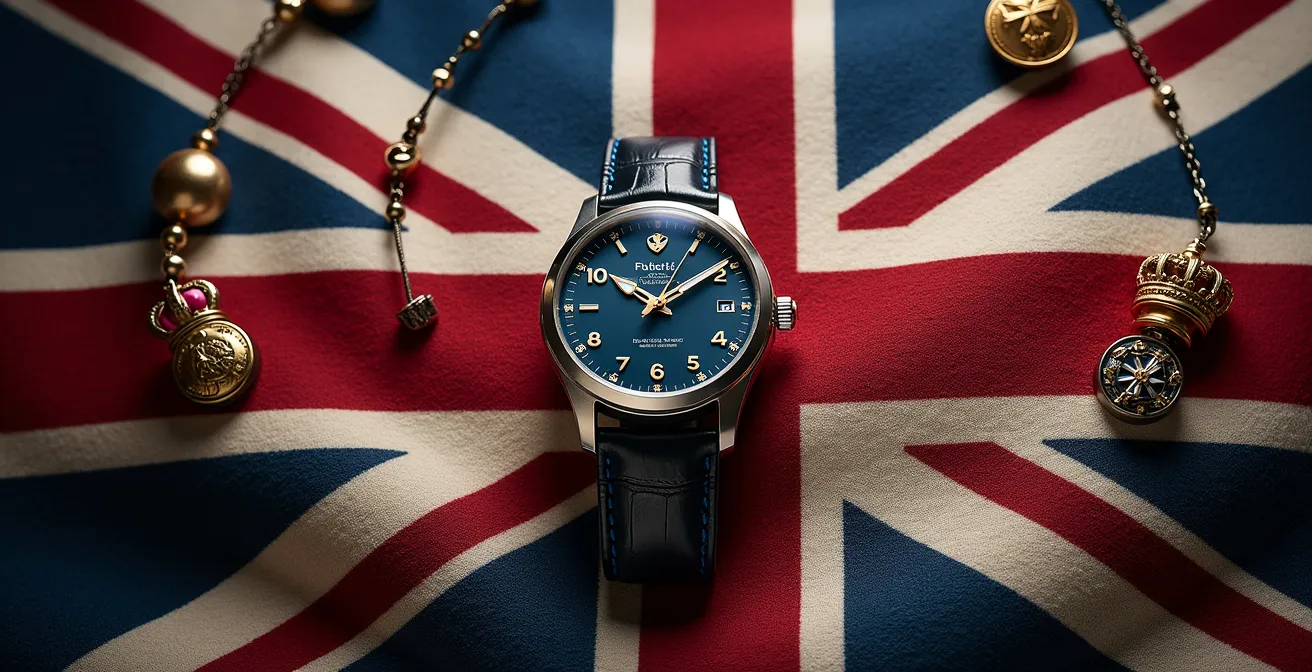
Beyond the British connection, exploring the boutiques of brands like A. Lange & Söhne or Vacheron Constantin offers a more intimate and educational experience than their perpetually crowded rivals. These houses produce watches of arguably equal or superior craftsmanship, and their SAs are often passionate educators eager to share the brand’s history. Building a relationship here is not only more pleasant but can also lead to acquiring a truly exceptional, and often rarer, timepiece. By diversifying your interest, you not only enrich your own collecting journey but also become a far more interesting and valuable client to any Authorised Dealer on Bond Street.
Now that you understand the strategy and the mindset required, the next step is to begin building your own Purchase Portfolio. Start by identifying a brand you genuinely admire beyond the hype and schedule a visit to its boutique not to buy, but to learn. This is the first move in your new game.