
Postpartum hair loss is usually a temporary phase, but it becomes a medical issue when it’s prolonged or worsened by underlying factors like specific nutritional deficiencies or chronic stress.
- The vast majority of shedding is due to a normal hormonal shift called Telogen Effluvium, which typically resolves on its own.
- Key warning signs are hair loss extending beyond 8-9 months postpartum, or low iron stores (ferritin), which can prevent regrowth.
Recommendation: If you’re concerned, the most effective step is not to self-prescribe supplements but to request a blood test from your GP to check your ferritin and thyroid levels.
Seeing clumps of hair in the shower drain or on your brush can be deeply distressing, especially during the already overwhelming postpartum period. For many new mothers, this sudden shedding feels alarming, leading to the anxious question: is this normal, or should I be worried? While postpartum hair loss is an incredibly common experience, a phenomenon affecting an estimated 90% of new mothers in the UK, the conversation often stops at “it’s just hormones.” This simplistic explanation, while reassuring, can mask underlying issues that prevent a full and timely recovery.
The standard advice revolves around patience, gentle hair care, and a healthy diet. But what if the shedding doesn’t stop? What if it seems more severe than what your friends experienced? The key to managing this concern lies in understanding the clinical threshold between normal, hormone-driven shedding and a more persistent problem fuelled by other systemic stressors. This is where a medical perspective becomes crucial.
This guide moves beyond the generic advice. It is designed to act as a clinical framework, helping you differentiate between the expected physiological process and the warning signs that warrant a conversation with your GP. We will explore the precise timeline of normal shedding, identify the specific nutritional deficiencies that truly impact your hair follicles, and highlight common lifestyle mistakes that can turn a temporary issue into a chronic one. The goal is to empower you with the knowledge to care for your hair effectively and know exactly when to seek professional medical help.
To navigate this complex topic, we have structured this guide to address your concerns step-by-step. The following sections will provide clear, evidence-based answers to help you understand and manage your postpartum hair loss with confidence.
Summary: Postpartum Hair Loss: A Clinical Guide
- Why does your hair fall out 3 months after an emotional shock (Telogen Effluvium)?
- How can scalp massage help reawaken follicles?
- Biotin or Fer: which deficiency really causes hair loss in women?
- The error of making tight ponytails when the follicles are fragile
- Diet problem: why does a lack of protein starve your hair?
- Why does chronic stress accelerate cellular aging?
- Why does your watch often overestimate your calories burned?
- Sulphate-Free Shampoo: Is It Necessary for Non-Coloured Hair?
Why does your hair fall out 3 months after an emotional shock (Telogen Effluvium)?
The sudden and significant hair shedding experienced after childbirth, or any major physical or emotional stress, is medically known as Telogen Effluvium. It’s not the shock itself that causes hair to fall out immediately, but rather the delayed reaction of your hair’s growth cycle. During pregnancy, high oestrogen levels prolong the anagen (growth) phase, leading to thicker, fuller hair. After delivery, oestrogen levels plummet, triggering a large number of hairs to prematurely enter the telogen (resting) phase all at once. About two to four months later, this “resting” hair begins to shed to make way for new growth, which is why the hair loss seems to appear out of nowhere.
Understanding this timeline is crucial for managing anxiety. This shedding is a normal, albeit dramatic, physiological process. It’s a sign that your body is recalibrating after the immense event of childbirth. A clinical study tracking postpartum women provided a clear timeframe for this process. It found that, on average, the start, peak, and end of hair loss was 2.9, 5.1, and 8.1 months postpartum, respectively. This gives you a clinical benchmark: shedding that starts around 3 months and subsides by 8 or 9 months is generally within the normal range.
The concern arises when the shedding continues well beyond this period or is exceptionally severe. While Telogen Effluvium is the primary driver, other factors such as nutritional deficiencies or underlying health issues can prolong it or even trigger a separate type of hair loss. Therefore, monitoring this timeline is your first diagnostic tool. If you’re still experiencing heavy shedding ten months postpartum, it’s a clear signal to consult your GP.
How can scalp massage help reawaken follicles?
While hormonal shifts are the root cause of postpartum shedding, you can play an active role in supporting the recovery of your hair follicles. One of the simplest and most effective methods is regular scalp massage. From a medical standpoint, the benefit is twofold: it increases blood flow to the scalp and can help reduce tension. Increased circulation delivers more oxygen and essential nutrients directly to the hair follicles, creating an optimal environment for them to re-enter the anagen (growth) phase. Think of it as gently waking up dormant follicles.
Furthermore, the physical act of massage can help to reduce stress, a known contributor to hair loss. The scalp can hold a surprising amount of tension, and massage helps to release it, which can have a calming effect on the nervous system and potentially lower cortisol levels. For a more targeted approach, incorporating specific oils can enhance the benefits. Rosemary oil, for example, has been studied for its potential to stimulate hair growth, sometimes compared to the effects of minoxidil.
The key is consistency and gentle pressure. A daily massage of just five minutes can make a noticeable difference over time. It’s not about aggressive scrubbing but about methodical, gentle stimulation to invigorate the scalp. Below is a simple routine you can incorporate into your daily self-care.
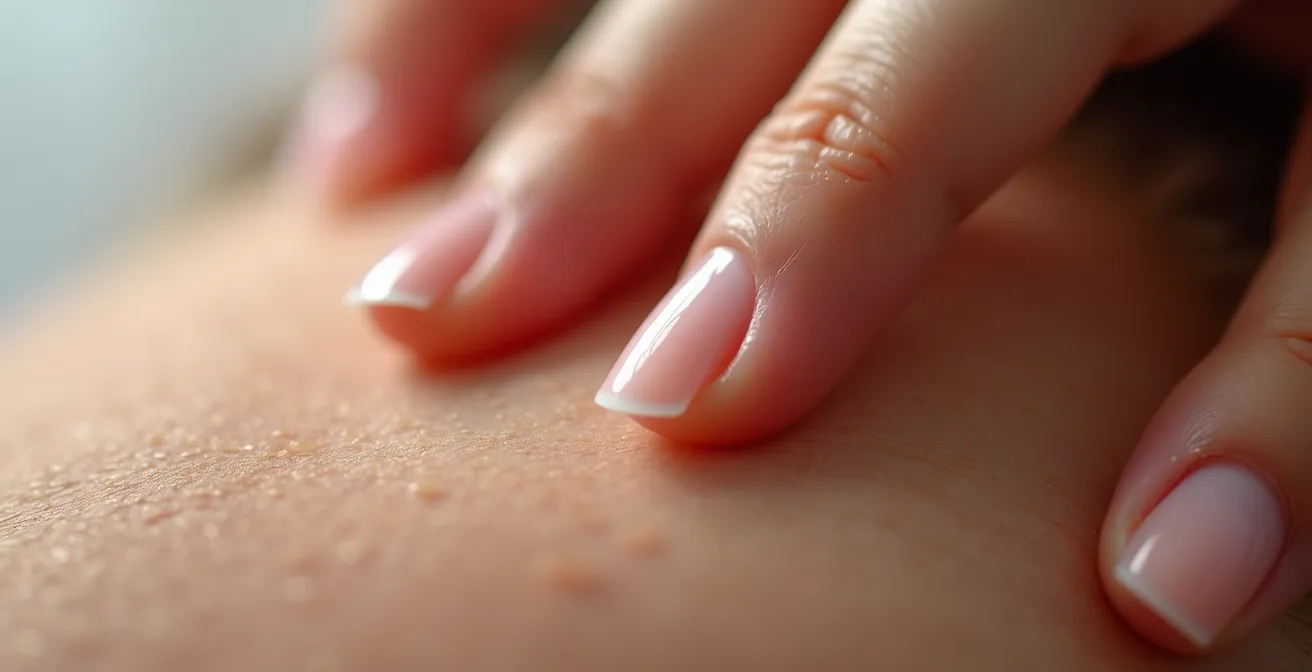
As you can see in this close-up, each follicle is a tiny organ that benefits from increased circulation and a healthy environment. By performing this massage, you are directly supporting the biological foundation of hair growth.
Your action plan: 5-minute daily scalp massage
- Apply 2-3 drops of a carrier oil like jojoba, optionally mixed with rosemary oil (available at Boots or Holland & Barrett), to your fingertips.
- Start at your temples, using the pads of your fingers to make small, firm circular motions. Continue for about one minute.
- Move to the crown and the top of your head, working in small circles from the front to the back for two minutes, ensuring you cover the entire area.
- Focus on the nape of your neck and the area behind your ears, using upward strokes for one minute to relieve tension.
- Finish by gently running your fingers through your hair from roots to ends, performing very light pulling motions to stimulate blood flow across the entire scalp for 30 seconds.
Biotin or Fer: which deficiency really causes hair loss in women?
In the world of hair supplements, biotin is often touted as a miracle cure. However, from a clinical perspective, its role in postpartum hair loss is frequently overstated. While biotin is essential for hair health, true biotin deficiency is extremely rare in the UK. For the vast majority of women, taking extra biotin will not have a significant impact on hormonally-driven hair loss. The real culprit to investigate is often a much more common deficiency: iron.
Iron deficiency is widespread among women of childbearing age, and pregnancy itself can significantly deplete your body’s iron stores. Iron is critical for producing haemoglobin, which carries oxygen for the growth and repair of all cells, including the cells that stimulate hair growth. When your body is low on iron, it prioritises delivering oxygen to essential organs, leaving hair follicles under-nourished. This can exacerbate Telogen Effluvium or prevent your hair from re-entering its growth phase efficiently.
The key marker to test is not just your iron level, but your ferritin level. Ferritin is the protein that stores iron in your body. It’s your “iron reserve.” While your standard iron levels might appear normal on a blood test, low ferritin reveals the true state of your reserves. UK clinical guidelines indicate that ferritin levels below 30 μg/L can significantly impact hair growth, even if they are technically within the “normal” lab range. This is the clinical threshold where hair loss becomes a medical concern linked to nutrition. If you suspect this is an issue, ask your GP for a blood test specifically to check your ferritin.
| Type | Iron Content | Absorption Rate | Common Side Effects | UK Availability |
|---|---|---|---|---|
| NHS Ferrous Fumarate | 65mg elemental | Higher with empty stomach | Constipation common | GP prescription |
| Boots Iron Bisglycinate | 14-20mg | Better tolerated | Less constipation | Over-the-counter |
| Spatone Liquid Iron | 5mg per sachet | Good absorption | Minimal GI effects | Boots, Superdrug |
Choosing the right supplement, if needed, should be done with medical guidance. Prescription-strength iron is effective but can cause side effects, while gentler over-the-counter options available at UK pharmacies like Boots may be better tolerated for maintaining levels.
The error of making tight ponytails when the follicles are fragile
When you’re a new mum, a quick ponytail or a tight bun can feel like the only manageable hairstyle. It’s practical and keeps hair out of your face. However, during the postpartum period when your follicles are already in a vulnerable state, this convenience can come at a cost. The constant, low-grade pulling from tight hairstyles can lead to a condition called Traction Alopecia. This is a form of mechanical hair loss caused by chronic tension on the hair shaft, which damages the follicle over time.
During Telogen Effluvium, your follicles are already weakened and more susceptible to this kind of “traction trauma”. A hairstyle that you wore without issue before pregnancy can now be enough to accelerate shedding or even pull out healthy hairs that were meant to stay. This is why many women notice increased hair loss around their hairline and temples, areas that bear the brunt of the tension from high, tight ponytails. As one beauty editor for Cosmopolitan UK shared about her experience:
Every time I’d wash my hair, huge clumps of my hair would fall out. I felt scared to brush it because I’d fill the hairbrush twice over with the amount of hair I was losing, and even tying it into a ponytail would result in strands coming loose.
– Cosmopolitan UK Beauty Editor’s Experience, Cosmopolitan UK
The solution is to give your follicles a break. This doesn’t mean you have to wear your hair down all the time. Instead, opt for looser styles. Use soft, fabric scrunchies (especially silk or satin ones) instead of tight elastic bands. Low, loose ponytails or braids are much kinder to your scalp. Consider using claw clips or spiral hair ties, like Invisibobble, which are specifically designed to distribute pressure more evenly and reduce tension. You can find these gentler alternatives in the hair accessory aisles of most UK stores like Boots, Superdrug, and ASOS.
Diet problem: why does a lack of protein starve your hair?
While iron is a critical micronutrient, the very structure of your hair is built from a macronutrient: protein. Hair is primarily made of a protein called keratin. When your dietary protein intake is insufficient, your body must make choices. It will prioritise using the protein you do consume for essential functions like tissue repair, hormone production, and immune response. Hair growth, being non-essential for survival, is one of the first processes to be shut down. This leads to a state of “follicular starvation,” where follicles are unable to produce strong, healthy hair.
For postpartum and breastfeeding mothers, protein needs are significantly higher. You are not only recovering from childbirth but also potentially producing milk, which is a protein-demanding process. It’s very easy to fall short on protein intake when you’re tired, busy, and grabbing whatever food is quickest. This deficit can severely worsen Telogen Effluvium and delay the regrowth phase. It’s a crucial piece of the puzzle that is often overlooked in favour of vitamin supplements.
To combat this, you must make a conscious effort to include a quality protein source with every meal and snack. This doesn’t require elaborate cooking. The focus should be on convenience and consistency. Think about lean meats, fish, eggs, dairy products like Greek yogurt and cottage cheese, legumes, and protein-fortified snacks. Spreading your intake throughout the day is more effective than having one large protein-heavy meal.

A well-stocked kitchen with easy-to-grab protein sources is your best defence against follicular starvation. Simple items like pre-cooked chicken from Aldi, Greek yogurt pots from Tesco, or protein bars from Boots can be lifesavers. Aiming for around 20-30g of protein per meal will provide your body with the building blocks it needs to support both you and your hair’s recovery.
- Breakfast: Greek yogurt pot (Tesco Finest, 15g protein) with a handful of almonds.
- Mid-morning: A Fulfil protein bar from Boots (20g protein).
- Lunch: Pre-cooked chicken breast from Aldi (25g) with a pre-made quinoa salad.
- Dinner: A salmon fillet from Lidl (22g) with lentils and vegetables.
Why does chronic stress accelerate cellular aging?
The link between stress and grey hair is well-known, but chronic stress also plays a significant role in hair loss by accelerating cellular ageing. When you’re under constant stress—as many new mothers are, dealing with sleep deprivation, hormonal shifts, and the demands of a newborn—your body produces high levels of the hormone cortisol. While essential in short bursts, chronically elevated cortisol creates a state of systemic inflammation and oxidative stress throughout the body.
This oxidative stress damages cells, including those in your hair follicles. It can shorten the anagen (growth) phase of the hair cycle and push more follicles into the telogen (resting) phase prematurely, effectively worsening Telogen Effluvium. In essence, chronic stress tells your body it’s in a perpetual state of crisis, and non-essential processes like robust hair growth are put on the back burner. It’s a survival mechanism that, in modern life, can become a chronic condition.
This is more than just “feeling stressed”; it’s a physiological state. The exhaustion, anxiety, and pressure of motherhood are potent systemic stressors. Acknowledging this is the first step. It’s not about eliminating all stress, which is impossible, but about implementing strategies to manage your body’s response to it. Prioritising sleep whenever possible, engaging in gentle exercise like walking, and practising mindfulness are not luxuries; they are medical necessities for cellular recovery. It is also vital to seek support. In the UK, the NHS provides free IAPT (Improving Access to Psychological Therapies) services, which are accessible via self-referral and offer crucial support for postpartum anxiety and depression.
Why does your watch often overestimate your calories burned?
Many new mothers use smartwatches to track activity and manage their health, which is a positive step. However, it’s clinically important to understand the limitations of these devices, especially concerning calorie expenditure. Smartwatches and fitness trackers are notoriously inaccurate at estimating calories burned, often overestimating by a significant margin. They primarily use heart rate and motion sensors, but they can’t account for numerous physiological variables, especially during low-intensity activities.
For a new mum, a typical day might involve a lot of walking with a pram, carrying the baby, and other stop-start activities. A watch may register this as sustained exercise and provide an inflated calorie burn number. For example, pushing a pram can reduce the arm swing the watch uses to measure steps and intensity, leading to faulty calculations. Relying on these inflated numbers can be problematic because it might lead you to believe you have more “calories to spare” than you actually do.
This creates a risk of being in an unintentional caloric deficit. If your watch says you’ve burned 500 calories on a walk when the real number is closer to 300, you might eat less than your body truly needs. When you combine this with the increased energy demands of recovery and breastfeeding, you can easily slip into a state of under-nourishment. This deficit directly contributes to the “follicular starvation” we discussed earlier, depriving your body of the energy and nutrients needed for hair regrowth. Instead of trusting the watch, listen to your body’s hunger cues and focus on consuming nutrient-dense food consistently.
Key takeaways
- Postpartum hair loss is normal up to about 8-9 months, driven by a hormonal process called Telogen Effluvium.
- A key medical concern is low iron stores (ferritin). A level below 30 µg/L can severely inhibit hair regrowth and requires a GP visit.
- Focus on foundational health: ensure adequate protein intake (20-30g per meal), manage stress, and avoid tight hairstyles that cause traction damage.
Sulphate-Free Shampoo: Is It Necessary for Non-Coloured Hair?
The “sulphate-free” trend is prominent in hair care, but is it a medical necessity for postpartum hair loss if your hair isn’t coloured? Sulphates are detergents that create the rich lather we associate with being “clean.” They are very effective at removing oil and product build-up. For some people, particularly those with a sensitive scalp or dry, colour-treated hair, they can be too harsh, stripping natural oils and causing irritation. However, for most people with non-coloured hair and a normal scalp, they are perfectly safe.
During the postpartum shedding phase, the priority is maintaining a clean and healthy scalp environment to encourage new growth. A build-up of oil, dead skin cells, and product can clog follicles and hinder this process. If you have an oily scalp, a gentle sulphate-containing shampoo might actually be more beneficial for keeping your follicles clear. Conversely, if your scalp has become dry and sensitive postpartum, switching to a sulphate-free option is a sensible choice to reduce potential irritation.
The decision should be based on your individual scalp condition, not marketing trends. There is no clinical evidence to suggest that sulphates themselves cause or worsen hormone-driven hair loss. For severe thinning, your focus should be less on sulphates and more on targeted treatments. As L’Oreal Professionnel UK advises for their specialised treatment:
Serioxyl Denser Hair Treatment for Thinning Hair should be used daily for a minimum of three months, to leave your hair looking denser and feeling fuller.
– L’Oreal Professionnel UK, Expert Hair Care Advice
This highlights that for significant concerns, a dedicated scalp treatment is more important than the presence of sulphates in your shampoo. Below is a comparison of popular sulphate-free options available in the UK, catering to different needs and budgets.
| Product | Price Range | Key Ingredients | Where to Buy | Best For |
|---|---|---|---|---|
| Garnier Ultimate Blends | £4-6 | Coconut oil, aloe vera | Tesco, ASDA | Budget-conscious, sensitive scalp |
| OGX Biotin & Collagen | £7-9 | Biotin, collagen, wheat protein | Boots, Superdrug | Volume boost, thin hair |
| L’Oreal Professionnel Serioxyl | £20-25 | Stemoxydine, resveratrol | Salons, Lookfantastic | Professional treatment, severe thinning |
If your hair loss persists beyond nine months, is accompanied by other symptoms like extreme fatigue or scalp pain, or if you simply feel something isn’t right, the next logical step is to book an appointment with your GP. A simple blood test can provide definitive answers and set you on the right path to recovery.