The greatest threats to your fine jewellery aren’t theft or loss, but the silent, cumulative damage from daily routines like showering and applying lotion.
- Chemicals in soaps and creams create a dulling film, while hard water minerals form abrasive limescale deposits that destroy brilliance.
- Physical activities and even temperature changes can cause microscopic damage that leads to bent settings, loose prongs, and cracked gemstones.
Recommendation: Adopt a preventative mindset. Understanding *why* damage occurs is the key to preserving your jewellery’s value and beauty for a lifetime, not just cleaning it after the fact.
That cherished piece of fine jewellery—be it an engagement ring, a family heirloom, or a personal milestone—is more than just an accessory. It’s a vessel of memory and a symbol of value. As a new owner, your instinct is to wear it constantly, integrating its beauty into your daily life. Yet, this very instinct exposes it to its greatest enemies, not in dramatic accidents, but in the quiet, seemingly harmless environment of your bathroom.
Most advice simply warns against wearing jewellery in the shower. This is correct, but incomplete. It’s the equivalent of being told not to touch a hot stove without understanding the science of heat transfer. True preservation comes from knowledge. It requires understanding the specific chemical reactions from your favourite moisturisers, the physical science behind thermal shock from a hot bath, and the geological reality of England’s hard water crystallising on your diamond’s facets.
This guide moves beyond the simple “don’ts”. We will delve into the hidden mechanisms that silently degrade your precious pieces. By understanding the ‘why’ behind each rule, you will shift from a reactive cleaner to a proactive custodian of your jewellery. We will explore how to safely clean your pieces at home, identify which stones require special care, and learn when removal is not just a suggestion, but a necessity for its long-term survival and even your insurance policy.
To help you master these essential practices, this article is structured to build your expertise from the ground up. Each section tackles a specific, common threat and provides the knowledge and tools you need to counter it effectively.
Summary: Why Your Daily Shower Could Be Silently Destroying Your Fine Jewellery
- Why your moisturiser tarnishes the shine of your diamonds?
- How to use du liquide vaisselle et une brosse souple pour raviver l’or?
- Nettoyeur à ultrasons : miracle ou danger pour vos émeraudes?
- L’erreur de nettoyer une pierre chaude à l’eau froide qui la fissure
- Quand enlever ses bagues : jardinage, gym et sommeil obligatoires
- Pourquoi le calcium et le magnésium se fixent-ils sur la fibre capillaire?
- L’erreur de stockage qui assèche les huiles de votre mouvement
- Laser Welding vs. Torch Soldering: Which Method Saves Your Antique Ring?
Why Your Moisturiser Tarnishes the Shine of Your Diamonds
A diamond’s brilliance is a marvel of physics, determined by how light enters the stone, reflects off its internal facets (brilliance), and splits into a rainbow of colours (fire). However, this spectacular light show depends on a perfectly clean surface. Lotions, hand creams, and moisturisers are the primary culprits in dulling this shine. Their oil-based formulas and chemicals are designed to adhere to skin, and they do the same to your jewellery, creating a greasy film that coats the stone and the metal setting.
This film acts like a frosted window, blocking light from entering the diamond and drastically reducing its sparkle. Over time, this buildup can also attract dirt and dust, creating a stubborn, cloudy layer that is difficult to remove. This is a major concern for UK jewellers; leading retailers like Beaverbrooks even offer annual professional cleaning services specifically to combat this common issue, highlighting how everyday products are a primary cause of diminished brilliance. It is therefore crucial to establish a protective routine.
The most effective strategy is prevention. The “Five-Minute Rule” is a simple but powerful habit to adopt:
- Step 1: Remove all rings and diamond jewellery before applying any moisturiser or hand cream.
- Step 2: Apply your chosen product thoroughly to your hands and skin.
- Step 3: Set a timer for 5 minutes. This is the crucial step to ensure complete absorption into the skin.
- Step 4: Check that no visible, greasy residue remains on your skin’s surface.
- Step 5: Only then, once your hands are completely dry, should you put your jewellery back on.
How to Use Dish Soap and a Soft Brush to Revive Gold
Once oils and dirt have accumulated, a gentle, effective cleaning method is required to restore your gold jewellery’s lustre without causing damage. The professional’s secret weapon is surprisingly humble: a simple, mild washing-up liquid. Harsh chemicals, abrasives, and chlorine-based cleaners found in many household products can permanently damage or discolour gold alloys and soft gemstones. A gentle, phosphate-free dish soap is the perfect solution for breaking down the greasy film left by cosmetics and daily wear.
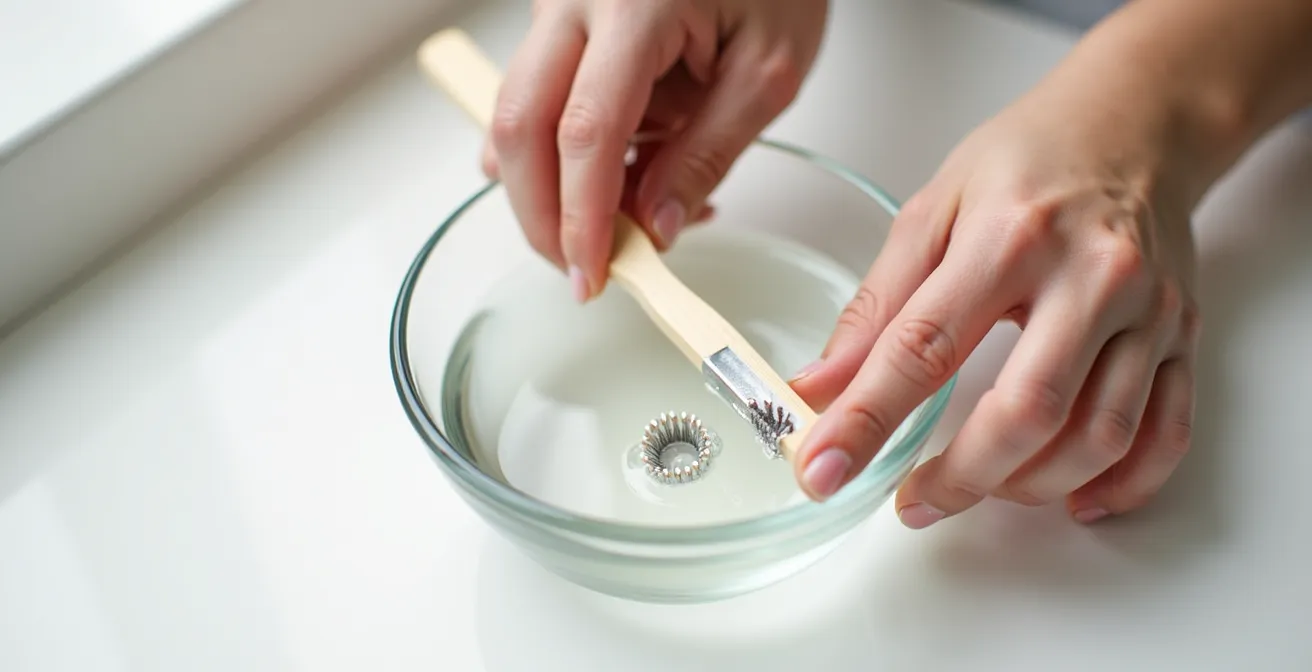
The technique is as important as the cleaning agent. You’ll need a small bowl of warm (not hot) water, a few drops of a suitable dish soap, and a very soft brush. A baby’s toothbrush is ideal for this task, as its bristles are soft enough to clean without causing micro-abrasion on the metal’s surface. Submerge the jewellery for a few minutes to loosen the grime, then gently brush all surfaces, paying special attention to the areas underneath the settings where dirt accumulates most.
This image demonstrates the correct, gentle technique used by professionals in London’s Hatton Garden to clean intricate settings without applying excessive force.
After brushing, rinse the piece thoroughly under clean, running water and pat it dry with a soft, lint-free cloth. Avoid paper towels, which can be abrasive. Not all dish soaps are created equal, however. For fine jewellery, it’s vital to choose a mild, non-citrus formula, as acidic ingredients can harm porous stones and certain metals over time. Here in the UK, several brands are well-suited for the task.
This table compares common UK dish soap brands and their suitability for cleaning your gold jewellery.
| Brand | Type | Safe for Gold | Avoid For |
|---|---|---|---|
| Ecover | Phosphate-free, gentle | Excellent | None |
| Fairy Original | Mild, no citrus | Good | None |
| Method | Plant-based | Good | None |
| Fairy Platinum | Heavy-duty | Avoid | All fine jewellery |
| Any citrus-based | Acidic formula | Never use | All metals & stones |
Ultrasonic Cleaner: Miracle or Danger for Your Emeralds?
An ultrasonic cleaner can seem like a magical solution for restoring jewellery to its showroom sparkle. These devices use high-frequency sound waves to create microscopic bubbles in a liquid solution. This process, called cavitation, implodes these bubbles with immense force, dislodging dirt and grime from even the most intricate settings. For hard, durable stones like diamonds, sapphires, and rubies, this can be a highly effective cleaning method. However, for many other popular gemstones, it can be a disaster.
The intense vibrations can be catastrophic for certain gems. Stones that are treated, fracture-filled, or have significant natural inclusions can be damaged or even shatter. Emeralds are particularly vulnerable because they are often “oiled”—a standard industry practice where natural oils are used to fill tiny surface-reaching fissures, improving their clarity. An ultrasonic cleaner will strip these oils out, leaving the emerald looking dull and revealing all its natural flaws. The same danger applies to soft, porous stones like opals, pearls, and turquoise.
To safely navigate the use of an ultrasonic cleaner, experts at the Gemological Institute of America (GIA) recommend a “traffic light” system. This approach categorises gemstones based on their ability to withstand the process. Before placing any item in a cleaner, you must be certain of its composition and any treatments it may have received. If in any doubt, always default to the gentle soap-and-water method.
- GREEN LIGHT (Safe): Diamonds, Sapphires, and Rubies can generally withstand ultrasonic vibrations, provided they are not heavily included or fracture-filled.
- AMBER LIGHT (Caution Required): Stones like Tanzanite, Iolite, and Topaz may be safe, but you must check with a professional jeweller first. They can have invisible treatments that make them vulnerable.
- RED LIGHT (Never Use): Emeralds, Opals, Pearls, Turquoise, Amber, and any fracture-filled or clarity-enhanced stones must never be placed in an ultrasonic cleaner. As professionals at Brilliant Earth advise, the risk of irreversible damage is simply too high.
The Mistake of Cleaning a Hot Stone with Cold Water That Cracks It
One of the most catastrophic and least-known dangers to gemstones is thermal shock. This occurs when a stone undergoes a rapid and extreme change in temperature, causing it to crack or shatter from the inside out. The physics are simple: materials expand when heated and contract when cooled. When this happens too quickly, the immense stress on the gem’s crystalline structure can cause it to fail, especially if it has natural inclusions which act as weak points.
This isn’t just a theoretical risk. Jewellery care experts warn that for some stones, a temperature change of just 30°C can cause thermal shock in gemstones with inclusions. Imagine coming inside on a hot summer day after gardening and immediately running your ring under a cold tap. Or, a scenario very specific to many English homes, taking a ring off after warming your hands by an Aga stove and deciding to clean it. The sudden temperature drop can be enough to cause a permanent, heart-breaking fracture in a precious gem.
Preventing thermal shock requires situational awareness of your jewellery’s temperature. Before cleaning any piece, you must allow it to return to room temperature naturally. This is especially important after activities that expose it to heat. Developing this habit is crucial for the longevity of your stones.
Here is a UK-specific guide to help you avoid common thermal shock scenarios:
- After sunbathing in a conservatory: Wait at least 15 minutes before cleaning your jewellery.
- Post-cooking near an Aga or hot stove: Allow a minimum of 20 minutes cooling time for your rings.
- Following exposure in a hot car: Let your jewellery acclimate indoors for 10 minutes before any water contact.
- After using a sauna or hot tub: Wait a minimum of 30 minutes before cleaning or submerging in cool water.
When to Remove Your Rings: Gardening, Gym and Sleep Are Mandatory
While chemical and thermal damage are significant threats, the most common cause of jewellery repair is physical damage from everyday activities. Fine jewellery, particularly rings with delicate settings like pavé or high-set solitaires, is not designed to withstand the rigours of manual labour, exercise, or even sleep. The metal can bend, prongs can loosen, and stones can be chipped or knocked out entirely. Removing your rings during these activities is not just a recommendation; it’s a mandatory practice for preservation.
The gym is a particularly hazardous environment. Jewellery experts report that weight training can bend ring shanks and loosen prongs in over 40% of cases when jewellery is worn regularly during exercise. The pressure from gripping a dumbbell or barbell directly impacts the band, warping its shape and compromising the integrity of the settings. Gardening is equally perilous. British soil often has high clay content, which is surprisingly abrasive, while common fertilisers contain corrosive chemicals. Furthermore, the simple act of gripping tools or working near a Cotswold stone wall creates a high risk of scratches, chips, and impact damage.
Even sleeping with your rings on can cause long-term harm. Prongs can catch on bedding, gradually pulling them away from the stone. You might also inadvertently knock your hand against a headboard or nightstand, causing impact damage. This consistent, low-level stress can lead to costly repairs. In fact, many UK insurance policies include a ‘reasonable care’ clause, and damage sustained during such activities could potentially be grounds for a voided claim. Professional jewellers universally advise removing rings for any manual labour to prevent such outcomes.
Your Daily Jewellery Safety Audit: A 5-Point Checklist
- Identify Contact Points: List all daily activities where your jewellery could be struck, scraped, or put under pressure (e.g., gym, gardening, DIY, contact sports, cooking).
- Inventory Your Habits: For one week, honestly track when you wear your jewellery during these high-risk activities. Note every instance.
- Assess for Coherence: Compare your habits to your jewellery’s value and delicacy. Are you treating a £10,000 pavé ring like a durable steel band?
- Gauge Emotional Impact: For each risk, ask: “How would I feel if this activity caused irreparable damage?” This helps prioritise which habits to change first.
- Create a Removal Plan: Designate a safe, consistent spot (e.g., a specific ring dish in your bedroom) to store your jewellery, and make removal the first step before any high-risk task.
Why Calcium and Magnesium Damage Your Jewellery in Hard Water Areas
If you’ve ever noticed a stubborn, chalky white residue on your kettle or shower head, you’ve witnessed the effects of hard water. This is a significant issue across England, as over 60% of UK households are in hard water areas, with the highest concentrations of mineral content found in London and the South East. While you may associate this problem with home appliances, the very same minerals—calcium and magnesium—are silently attacking your fine jewellery every time you wash your hands or shower with it on.
When hard water evaporates, it leaves behind mineral deposits known as limescale. Unlike the soft, greasy film of soap scum, limescale consists of hard, crystalline structures of calcium carbonate. These crystals are abrasive and bond tightly to metal and gemstone surfaces. On a diamond, this coating creates a cloudy, semi-opaque layer that is far more stubborn than soap film and drastically reduces sparkle. On gold or platinum, it can create a dull, chalky finish that is difficult to polish away.
It is crucial to understand the difference between these two types of buildup, as they require different removal methods. Soap scum can be removed with the gentle dish soap method, but limescale often requires a more intensive approach, sometimes even professional polishing, which can wear down the metal over time. Prevention, by removing jewellery before showering or washing up, is therefore paramount, especially in hard water regions.
This table clarifies the key differences between the two common types of jewellery buildup.
| Type | Composition | Texture | Removal Method | Professional Treatment Needed |
|---|---|---|---|---|
| Soap Scum | Fatty acids + minerals | Soft, greasy film | Regular soap & water | No |
| Limescale | Calcium carbonate crystals | Hard, chalky deposit | Acid-based cleaners or professional polish | Often required |
The Storage Error That Dries Out Your Organic Gemstones
After carefully protecting your jewellery from chemicals, impact, and hard water, the final frontier of care is proper storage. Most people assume that a dry, secure place like a safe or a sealed box is the best environment. While this is true for most jewellery, it can be a fatal mistake for organic and porous gemstones like pearls, opals, and even some emeralds. These gems contain a certain amount of water in their structure, and they need to draw moisture from the air to maintain their integrity and lustre.
Storing them in an overly dry environment, such as a bank safe deposit box or a dehumidified room, can have devastating consequences. According to the GIA, this can cause opals to lose their famous play-of-colour, a process called “crazing,” which leads to a network of fine cracks across the surface. For pearls, extreme dryness can lead to brittleness and cracking, destroying their nacre and lustre. This is a classic example of how well-intentioned care, without specific knowledge, can do more harm than good.
The key is to provide a balanced environment that is neither too damp (which can encourage mould) nor too dry. The goal is to mimic the natural humidity levels from which these gems benefit. This requires a different storage strategy than for your diamonds and gold. Following professional advice from organisations like the National Association of Jewellers is vital for the longevity of these delicate pieces.
Here are some professional-level storage solutions for your organic gemstones, based on advice from the National Association of Jewellers:
- For Opals: Place a small, damp (not soaking) cotton ball inside their storage pouch or box. Be sure to replace it weekly to prevent it from drying out or growing mould.
- For Emeralds: Store them in fabric-lined boxes at a stable room temperature. Avoid the extreme dryness of bank vaults.
- For Pearls: Keep them in breathable cloth or silk bags. Never store pearls in plastic bags, which trap moisture unevenly and can degrade the surface.
- Avoid Heat Sources: Always keep jewellery boxes away from radiators, direct sunlight, and other heating sources that create a dry micro-environment.
Key Takeaways
- Prevention over Reaction: The best way to care for fine jewellery is to understand and prevent the hidden causes of damage from daily life, not just clean it afterwards.
- Context is Everything: Your local environment (like hard water in London) and daily habits (using an Aga stove) have a direct impact on your jewellery’s health.
- Not All Gems Are Equal: A cleaning method that is safe for a diamond can destroy an emerald or opal. Always know what you own before you clean or store it.
Laser Welding vs. Torch Soldering: Which Method Saves Your Antique Ring?
Even with the most diligent care, physical wear over many years is inevitable, and a time may come when your jewellery needs professional repair. One of the most common repairs is “re-tipping” prongs—the small metal claws that hold a gemstone in place. As one expert from the renowned Birmingham Jewellery Quarter notes in an industry consultation on professional repair patterns, this wear is often accelerated by daily habits.
The primary reason prongs need re-tipping is long-term wear, often accelerated by the abrasive and corrosive effects of daily showering.
– Professional Jeweler, Birmingham Jewellery Quarter, Industry consultation on repair patterns
When a repair is needed, especially for a delicate or antique piece, the method used is critically important. For generations, traditional torch soldering has been the standard. This involves using a flame to heat the metal to a melting point to add more material or join pieces. While effective for simple repairs on robust pieces, the high and widespread heat can be disastrous for jewellery with heat-sensitive stones like pearls, emeralds, or opals, or for intricate Victorian filigree work.
Today, a far more precise and safer alternative exists: laser welding. This technology uses a focused beam of light to melt a very small, targeted area of metal, creating a strong weld with minimal heat transfer to the rest of the piece. This means a jeweller can re-tip a prong right next to a fragile pearl without ever having to remove the stone. While more expensive and only available at specialised workshops, typically found in hubs like London’s Hatton Garden or Birmingham’s Jewellery Quarter, it is the only truly safe option for valuable and antique pieces.
Choosing the right repair method can mean the difference between a successful restoration and a catastrophic loss.
| Method | UK Cost Range | Heat Impact | Best For | Available In |
|---|---|---|---|---|
| Torch Soldering | £50-£80 | High heat, wide area | Simple repairs, no heat-sensitive stones | Most local jewellers |
| Laser Welding | £100-£150 | Pinpoint heat, minimal spread | Victorian pieces with pearls, complex settings | Hatton Garden, Birmingham’s Jewellery Quarter |
Protecting your fine jewellery is an active, ongoing practice rooted in knowledge. By moving beyond simple rules and understanding the science behind potential damage, you transform from a mere owner into a true custodian. Start today by implementing one new habit, like the five-minute moisturiser rule, and build from there to ensure your treasured pieces remain as brilliant as the day you received them.